MyKitchenInHalfCups

Once Upon a time: Cooking … Baking … Traveling … Laughing …


10 Comments

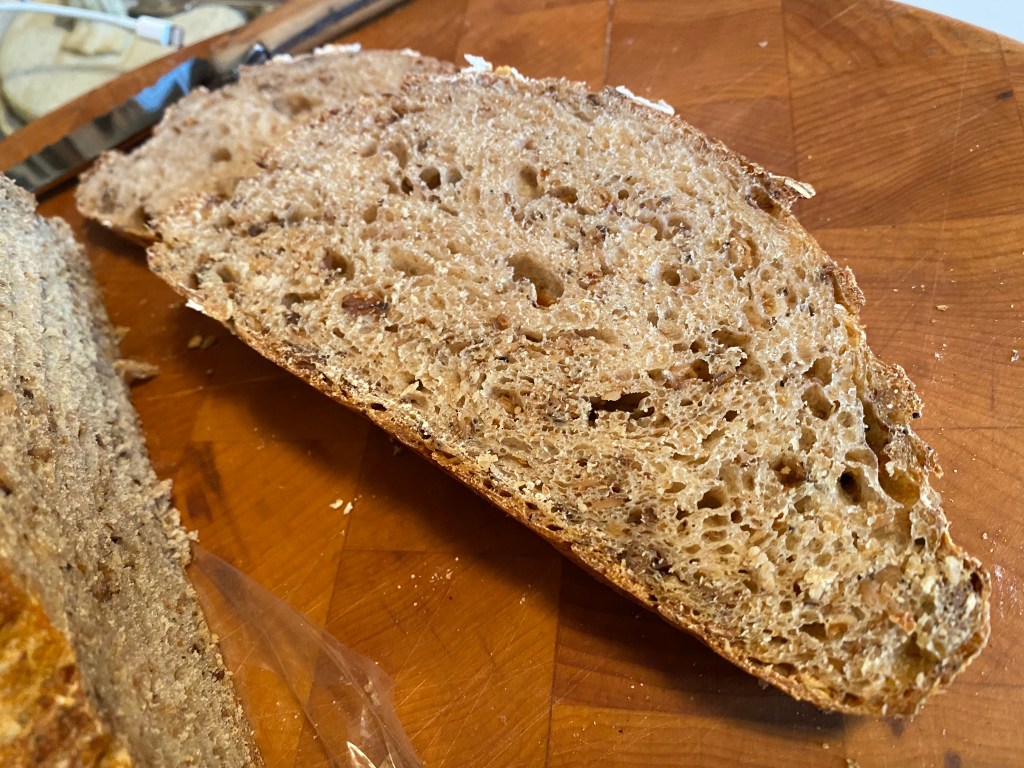
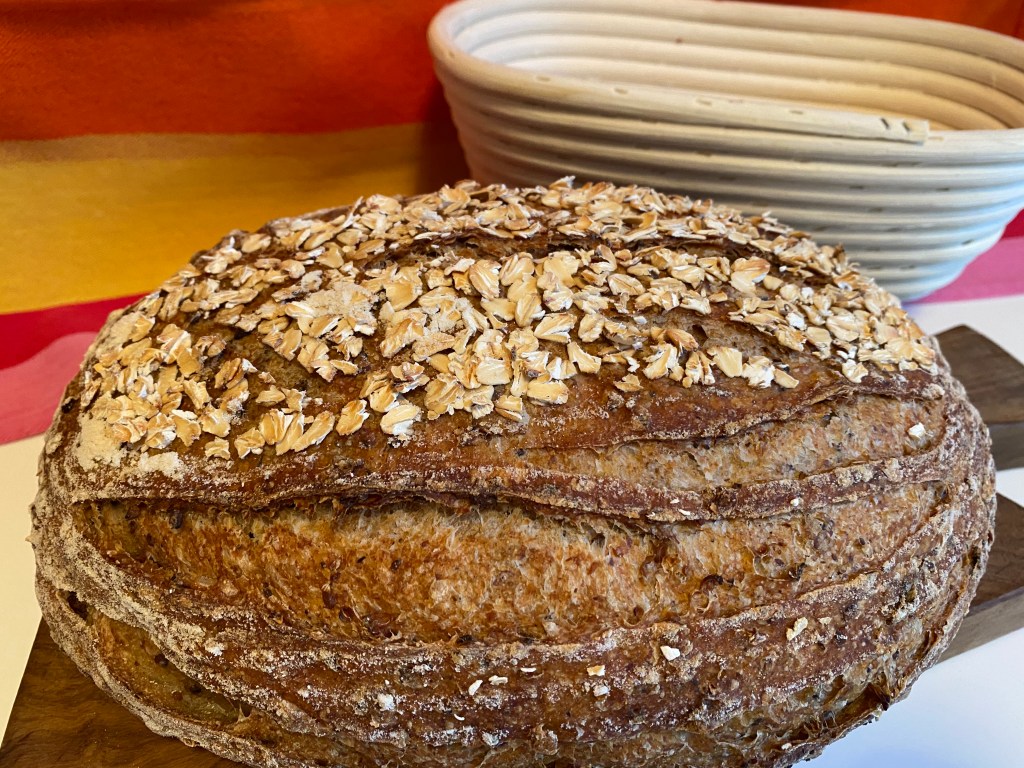
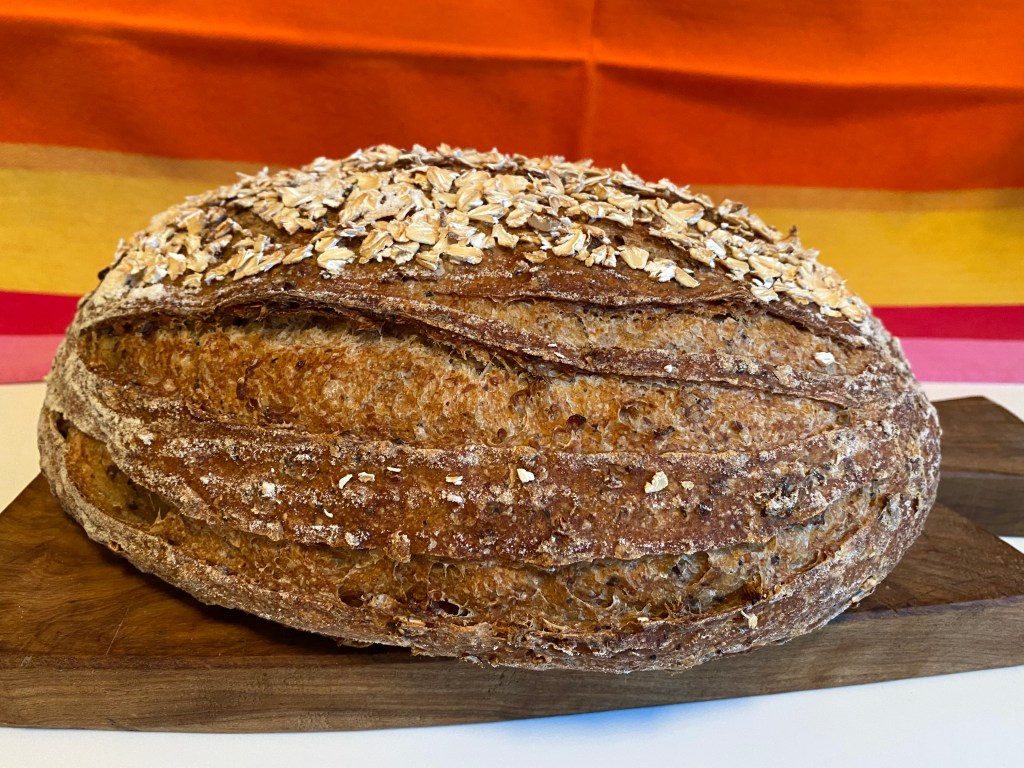
Toasted Oats Bread ~ BBB

Celebrate!

Toast!

Raise your glasses to increasing vaccine availability and toasted oats!  

YES! Thank You Elizabeth ( blogfromourkitchen) out Kitchen of the Month! (You should know that every month, Elizabeth is the Babe who does the graphic magic to create our unique logo for each bread.) This is certainly a winner in our virus snow bound abode. 

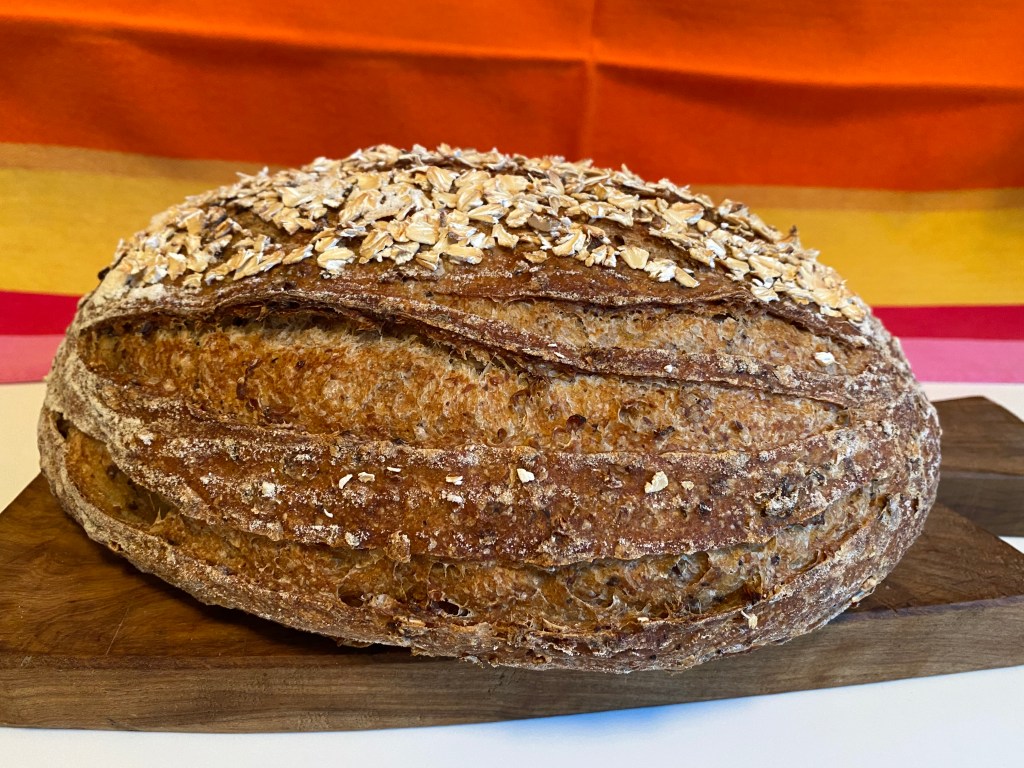
Toast these oats in a skillet not the oven! YES!!  Oh and I do appreciate you have to stand totally at attention at the stove to avoid catastrophe but you have to keep an eye on the oven as well and the stove top for me took all of 5 minutes 30 seconds.
Toasted Oats Bread ~ BBB

Leavener

  • 60 grams whole wheat flour
  • 60 grams water
  • 40 grams starter from the fridge (about 30 grams)

Oats

  • 100 grams rolled oats, toasted
  • 110 grams boiling water

Actual Dough

  • 100 grams 100% organic whole wheat flour
  • 400 grams unbleached all-purpose flour
  • 5 grams wheat germ
  • 5 grams rye chops
  • 8 grams diastatic malt
  • 325 grams water
  • all of the leavener from above,
  • 10 grams salt + 25 grams water
  • all of the rolled oats mixture from above

Topping (optional)

A rough looking dough.
  • Rolled oats
    • Leavener: In the evening of the day before making the bread: Put the starter, flour and water into a smallish bowl. Mix with a wooden spoon until the flour is stirred in well. I used a bread whisk. Cover the bowl with a plate (I use a shower cap) and set aside overnight in the oven with only the light turned on. Unless it is ridiculously hot in the kitchen. In that case, leave the oven light turned off.
  • Prepare the Oats: Pour rolled oats into a dry cast iron frying pan and place it over medium high heat, stirring with a wooden spoon from time to time. It takes about about 7 minutes to toast the oats. (They smell wonderful!) (Previously when I’ve toasted oats I’ve done it in the oven.  Toasting them in a skillet, gives you much more control and resulted in a uniform darkening color and much better flavor enhancement. Henceforth, I will be toasting in a skillet.) Transfer the toasted oats into a medium-sized bowl and pour boiling water over top. Cover with a plate and leave overnight in the oven with the leavener.
  • Mix the dough In the morning of the day you will be making the bread: When a small forkful of the leavener floats in a small bowl of room temperature water (I have never tried this), you can go ahead and mix the dough: Sift the whole wheat flour into a large mixing bowl, reserving the bran for after shaping. I did not do the sifting Add all-purpose flour, wheat germ, malted wheat chops (I thought I didn’t have malted wheat chops, turns out I did, used rye chops and some diastatic malt), and 325 water to the sifted whole wheat flour. Stir with a wooden spoon. (Again I used my bread whisk)  Set aside for a moment.
  • Weigh the salt and 25 grams water, whisking it together in a small bowl. Set this bowl aside in the oven with only the light turned on.
  • Add the leavener to the large bowl. Use a dough whisk or wooden spoon to mix these ingredients together to make a rough dough. Cover the bowl with a plate (or shower cap) and leave on the counter for about 30 minutes.
  • Adding the salt: Pour the salt mixture over the dough.
  • Kneading: Use one of your hands to squish the salt and water into the dough; use the other hand to steady the bowl – this way you always have a clean hand. At first the dough might be a bit messy and seem like it’s coming apart. Persevere. Suddenly, it will seem more like dough than a horrible separated glop. Keep folding it over onto itself until it is relatively smooth. Cover with a plate and leave to rest for about 30 minutes.
  • Adding the oats and first stretching and folding: Add the oats overtop. (First time I baked this, I had already added the oats. Since the first time I toasted oats in the oven, the color was altogether different. Ultimately, I don’t think the timing of adding the oats made much difference.) Turn the bowl as you fold and re-fold the dough into the center, to distribute the oats. Cover the bowl with a plate and leave on the counter (or if the kitchen is cool like ours in winter and spring, into the oven with only the light turned on).
  • Continuing to stretch and fold: Repeat the folding step about 3 times in all at 30 minute intervals. After the final time of folding, leave the covered bowl in a draft free area until the dough has almost doubled.
  • Pre-shaping: Scatter a dusting of all-purpose flour on the board and gently place the dough on the flour. Fold the dough over in half, gently patting off any extra flour that might be there. Turn the dough a quarter turn and fold in half again. Continue turning and folding in half until the dough is shaped in a ball. Leave it seam side down on the board and cover with a large overturned mixing bowl (or a tea towel) and let rest for about 30 minutes.
  • Prepare the brotform: Liberally coat the insides of a brot-form with rice flour.
  • Shaping and adding optional topping: Scatter a very light dusting of flour on top of the round. Gently press down with the palms of your hands to create a disc that is about 4 centimeters deep. Carefully turn the disc over. Without breaking the skin on the bottom, use the dough scraper to fold the dough in half. Turn the dough a quarter turn and continue folding until a ball is created. Leave it seam side down and use the sides of the dough scraper to tighten the dough ball further. Once it has been tightened, wet your hands and rub them gently over the top. Scatter quick oats overtop. Now carefully put the shaped loaf seam-side UP into the brotform. Scatter the reserved bran evenly onto the seam area. Cover with the tea towel or an overturned mixing bowl and let sit for an hour or so to allow the loaf to almost double. “Almost” is the key here….
  • Preheating the oven: To know when it’s time to bake, run your index finger under water and gently but firmly press it on the side of the bread. If the dough springs back immediately, recover the bread and leave it on the counter for another 15 minutes of so. If the dough gradually returns back after being pressed, leave the bread on the counter. Put a baking stone on a lower shelf of the oven. Place a cast-iron combo cooker (or lidded casserole dish) on the middle shelf and preheat the oven to hot (we set ours to 450°F).  (I opted for an oval brotform, without a cast iron oval large enough to bake it in, I baked the loaf on parchment paper, pushed it onto the hot baking stone in the oven and covered it with a very large stainless bowl.)
  • Scoring: When the oven is thoroughly preheated about fifteen minutes later, transfer the round into the hot shallow pan of the combo-cooker.   I adapted scoring to the oval shape I had. Using a lame, sharp knife, or scissors, score the bread in the pattern you like.
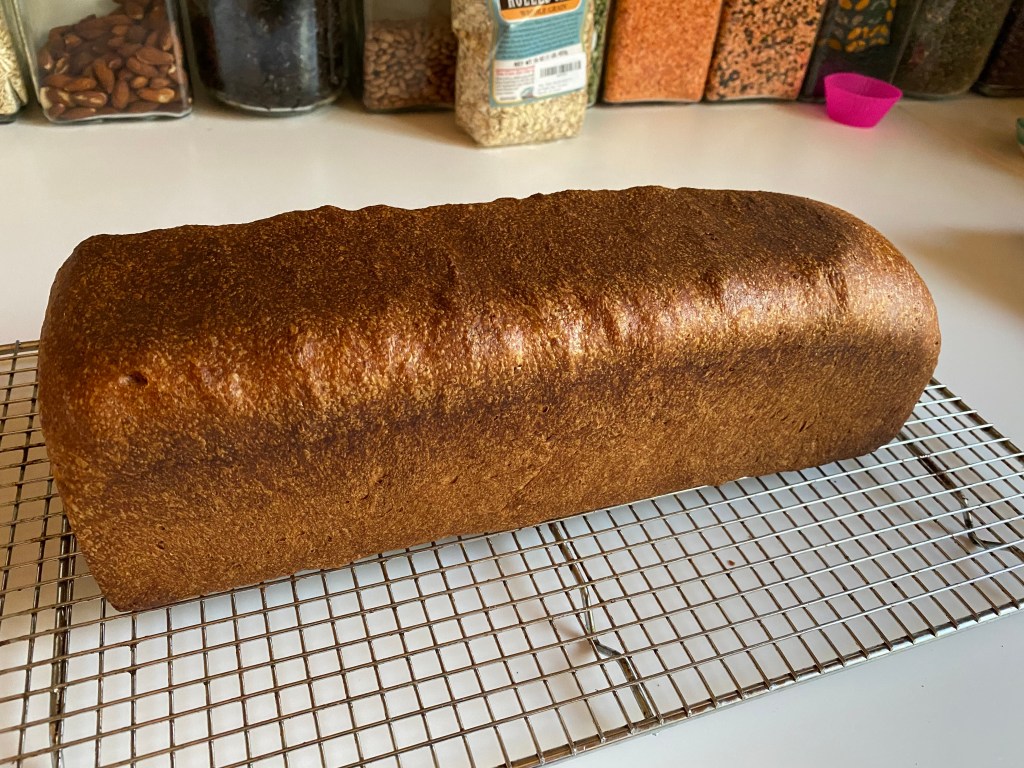
  • Baking: Bake for 30 minutes with the lid on. After 30 minutes, remove the lid and, without stopping to stare in amazement at the amazing oven spring actually I could not help but at least momentarily stare in amazement at the oven spring, close the oven door to continue baking for another 30 minutes, until the crust is a lovely dark golden brown and the bread sounds hollow when knuckle-rapped on the bottom. (Internal temperature probe showed 204°F.)
  • Cooling: When the bread has finished baking, remove it from the oven and allow it to cool on a footed rack before slicing and eating; the bread is still cooking internally when first removed from the oven! If you wish to serve warm bread (of course you do), reheat it after it has cooled completely: To reheat any uncut bread, turn the oven to 400°F for 5 minutes or so. Turn the oven OFF. Put the bread into the hot oven for about ten minutes. This will rejuvenate the crust and warm the crumb perfectly.

Yes, this does look like an involved recipe. Yes, there are a number of steps. Yes, because it looks long, it looks difficult.  The actuality is the single steps are spread out over time but are simple to execute with long stretches where you do whatever you like and a single step takes only a short bit time.

Do those short steps get you to a worthwhile goal … what a very foolish question,  My answer is an emphatic YES!!!  We would love to hear your answer:
I believe you should and will want to make toasted oats bread too! To receive a Baking Buddy Badge to display on your site, post about your toasted oats adventure in the next couple of weeks (we love to see how your bread turns out AND hear what you think about it – what you didn’t like and/or what you liked) before the 29 January 2021.

Here’s how to let us know:

  • email Elizabeth
  • » Remember to include your name and a link to your post
  • » Please type “BBB January 2021 bread” in the subject heading

Now about next month…This little group started in February 2008 that means that next month we’ve been around … It’s our Anniversary! And for the first time ever I’m giving you a hint for next month’s bread. We’ll be playing around with…


9 Comments

BBB ~ St. Lucia Saffron Buns, Lussekatter

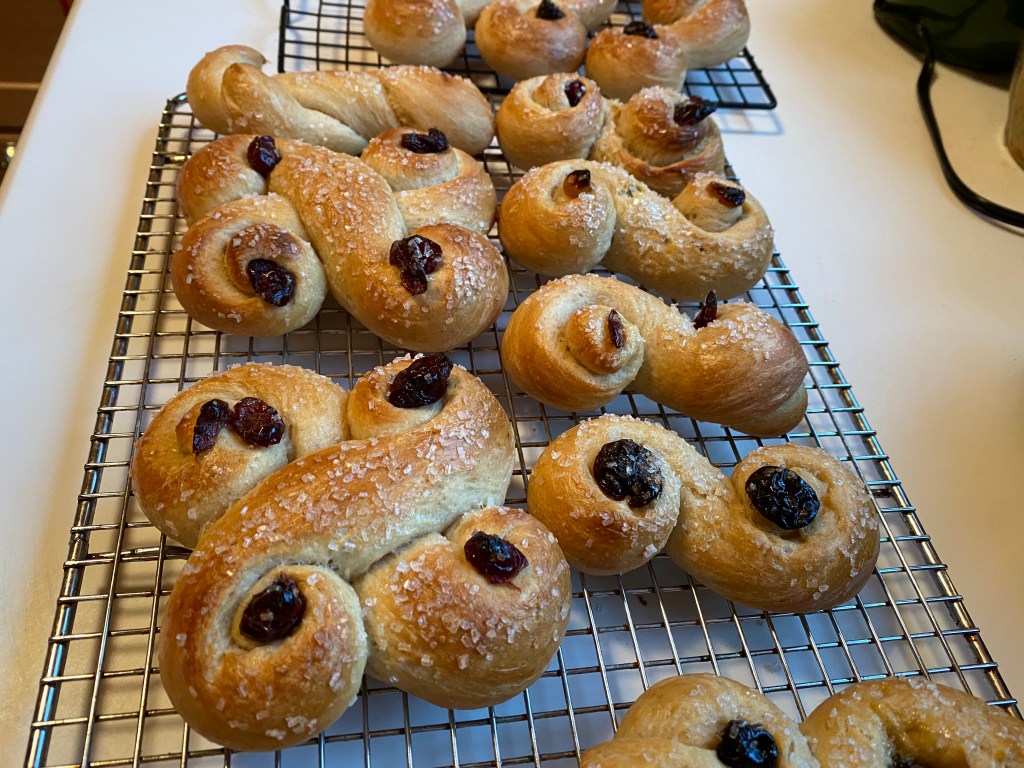
I don’t know about where you are but where I am it’s dark really early. Before 6 in the evening the sun is long gone and it’s gotten to dark. Our Kitchen of the Month, Judy, has picked a wonderful roll/bun to light up the short early dark days of December! Saffron is the spice to provide the light. These are a traditional Christmas celebration bread in Italy and Scandinavia.

I found this a wonderfully silky dough to work even using a lot of white whole wheat flour. I always try to bake with some whole grain flour.

Why did I feel compelled to convert this to a sourdough? I think just because I’ve recently gotten a sourdough going again and so I’m trying hard to keep it going. The way I did the sourdough does add considerable time to the process and I’m sure if you follow Judy’s yeasted recipe you’ll have these little bun coming out of your oven much sooner. Still I really enjoyed the longer time and am totally delighted with the end product.

My only regret is when I got to the shaping and my hands were deep into this I’d forgotten the simple shaping of making these into cats. I really want to do that next time. I think Elizabeth will be doing cats but won’t be posting yet for several days. Maybe one/some of the other Babes will be doing the cat shape but I’m sure one/some will have some variety so check them out.

The shapes are really pretty self explanatory and simple to do.

St. Lucia Saffron Buns, Lussekatter

Yield: 18 rolls

LEAVEN
60 g starter
70 g water
60 g white whole wheat
DOUGH
All of the above leaven
105 g water
1/4 teaspoon saffron threads
3 tablespoons King Arthur dry milk powder
220 g white whole wheat
120 g bread flour
110 g AP flour
1/2 teaspoon kosher salt
1/2 teaspoon ground cardamom
56 g unsalted butter, softened
60 g of sour cream
30 g wildflower honey
2 large eggs
Raisins, currants, dried cherries, cranberries, blueberries
GLAZE
1 egg, beaten

The night before mix together the leaven. Cover and leave at room temperature for 10 to 14 hours until bubbly.

Warm water and saffron in microwave about 20 seconds.  (I held the butter for the second fold, next time I may try adding it when I’ve finished kneading it the first time and before starting the folding).  Stir in the honey, sour cream and eggs until blended.  Let cool until about 80-90°F, or warm to the touch.

Whisk flours, dry milk powder and cardamom: I held out the salt until after the first folding.

 Make a well in the center of the flour and add the saffron-water mixture, the eggs, and the sour cream. Mix the ingredients until well incorporated.

Knead the dough: Knead to incorporate. Do this until the dough is still a little sticky to the touch, but does not completely stick to your hands when you handle it.

Let dough rise: Shape the dough into a ball and place in a large bowl. Cover. 
Butter and salt: I added these at the second fold. The dough really came apart. Next time I will add Butter and Salt earlier: after kneading let rest 20 minutes then add butter & salt.
Let sit in a warm place for 2-3 hours, Do at least 2 fold about 45 minutes apart then let the dough rest until about doubled. This dough became silky smooth, lovely to work.

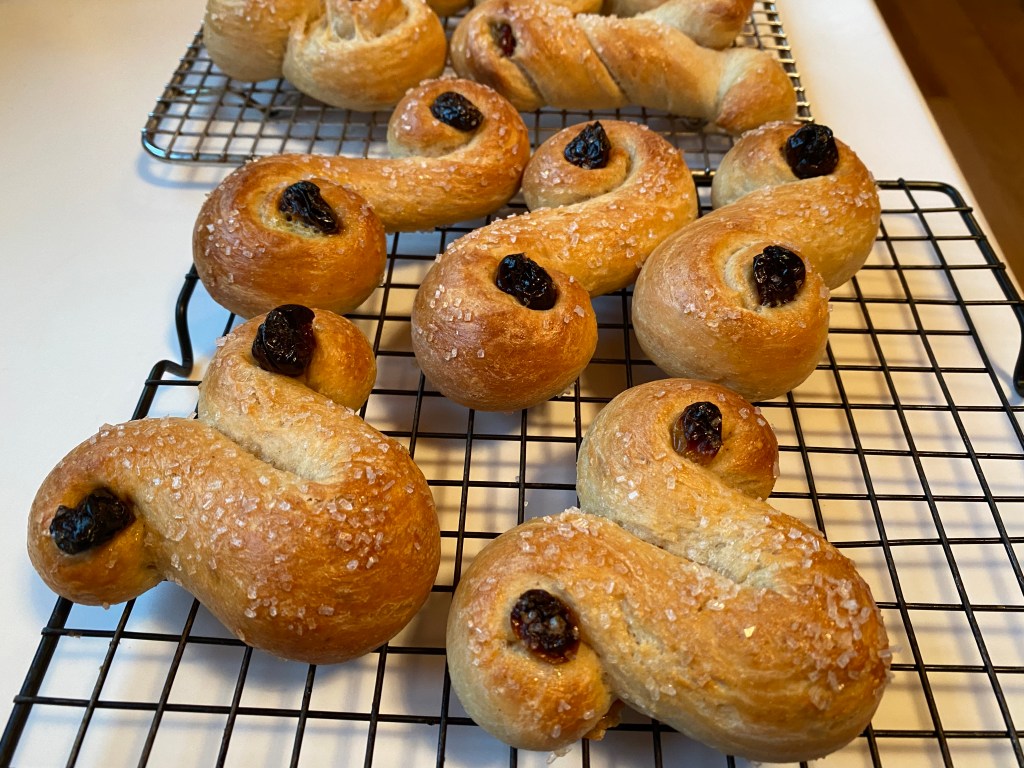
 Form dough into shapes: When the dough has doubled in size, gently press it down and knead it a couple of times. I weighed the dough and divided by 18 which required each roll to weight about 60 grams. Break off a piece and form it into a ball about 2 inches wide. Roll the ball out into a snake, about 14 inches long.
Then Curl the ends in opposite directions, forming an “S” with spirals at each end. Place on a lined baking sheet and repeat with the rest of the dough. There are a number of shapes commonly accepted for these rolls.


Let sit for final rise:  Cover and place in a warm spot until the dough shapes double in size, mine took an hour.

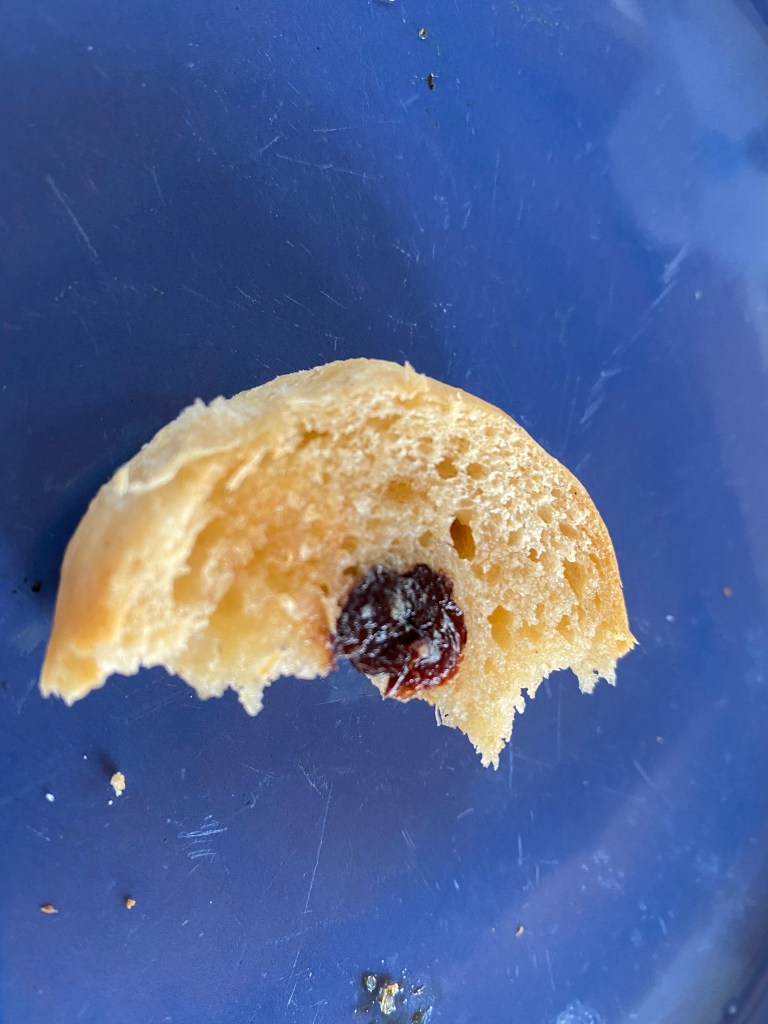
Brush with egg wash, place raisins in buns: Preheat oven to 400°F (205°C). Using a pastry brush, brush some beaten egg over the tops and sides of the uncooked buns. Place raisins, cranberries or cherries by really poking them in deeply otherwise they may well jump ship.

Bake: Place in the oven and bake at 400°F (205°C) for about 18 to 20 minutes (turning halfway through cooking to ensure even browning), until the buns are golden brown.
Remove from oven and let cool for 5 minutes before eating.

Would I do these again? In a heart beat. The shapes can be varied easily and are all interesting. The sparkling sugar gives the buns just the perfect crunch and sweetness along with the honey. I would try a little more saffron next time as I really didn’t taste or even see much of it in the bun. These are just beauties.

If you wish to bake with us as a Buddy, please submit your post and photos by December 29th to be included in the roundup and earn your baking badge.  Send to jahunt22 at gmail.com.

Visit the other Babes to check out their versions of Lussekatter.


13 Comments

Potato Focaccine ~ BBB

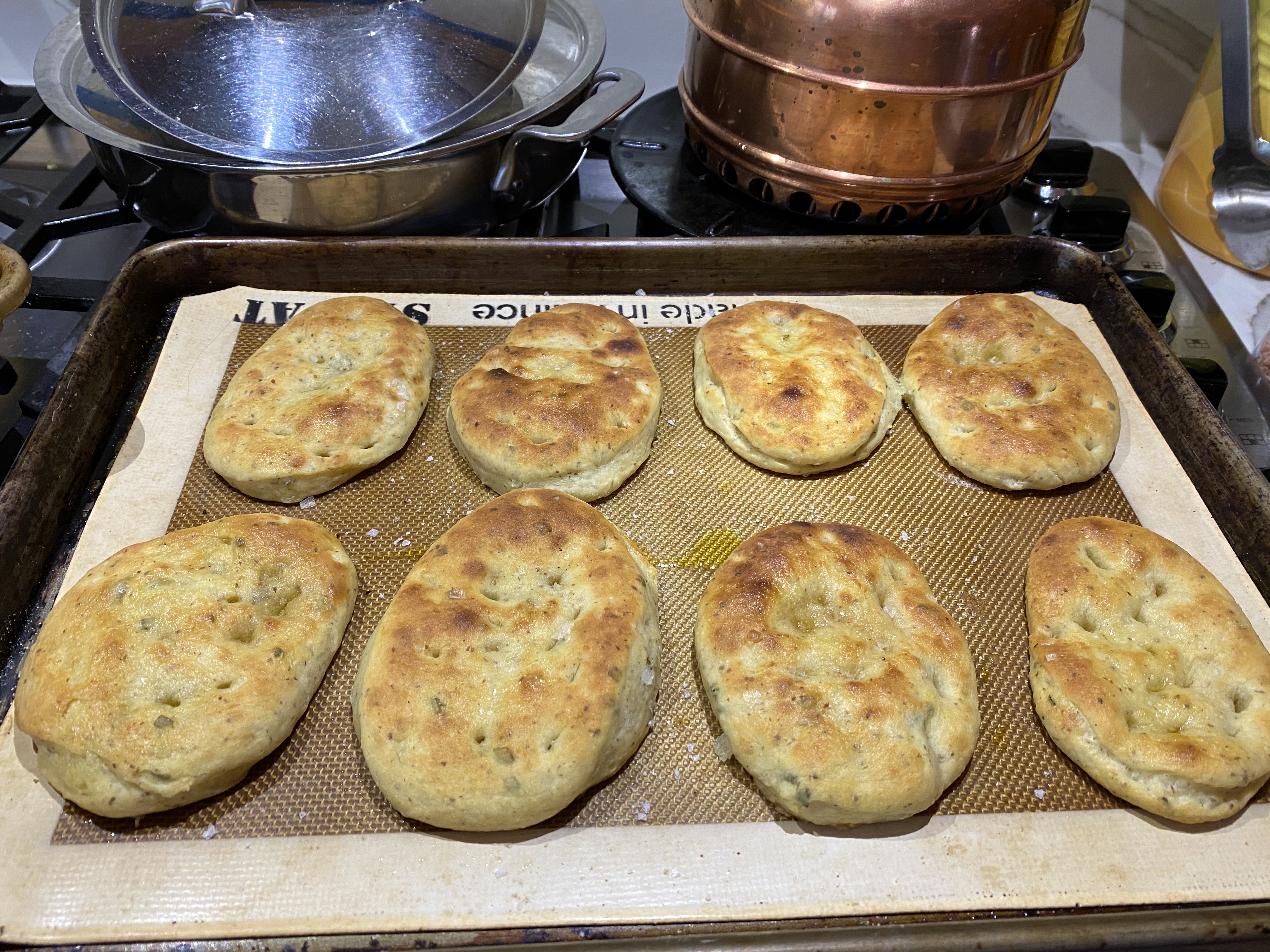
I will never forget my first Focaccia.  We were driving around Italy and wanted to stay in Portofino.  It got late, very dark and very rainy.  We stopped at the first hotel we came to just off the road and almost in the sea.  All night it rained and the waves washed upon to the patio just outside our room.   In the morning we discovered we hadn’t quite made it to the city.   We would have needed to stay on the road and go around one last curve.  The choice was to drive into the city and find a place to park OR cross the road and follow a path over the hill.  The path wound through olive groves and past several homes.  When we topped the hill, Portofino was at our feet.  We sent hours wondering the streets and finally ended up along the warf where there was a food market.  One of the town bakeries had tables displaying so many breads … I was in heaven.  We settled on a small flat loaf that measured maybe 9×9.  It had been slathered in olive oil and generously infused with rosemary.  That was the be all and end all of focaccias! 


Over the years I’ve baked focaccia many times.  There are many recipes, many just slightly different, all very good.  Carol Field (The Italian Baker & Focaccia: Simple Breads from the Italian Oven) has been my Italian bread geru for may years and indeed she talkes about Focaccine.  

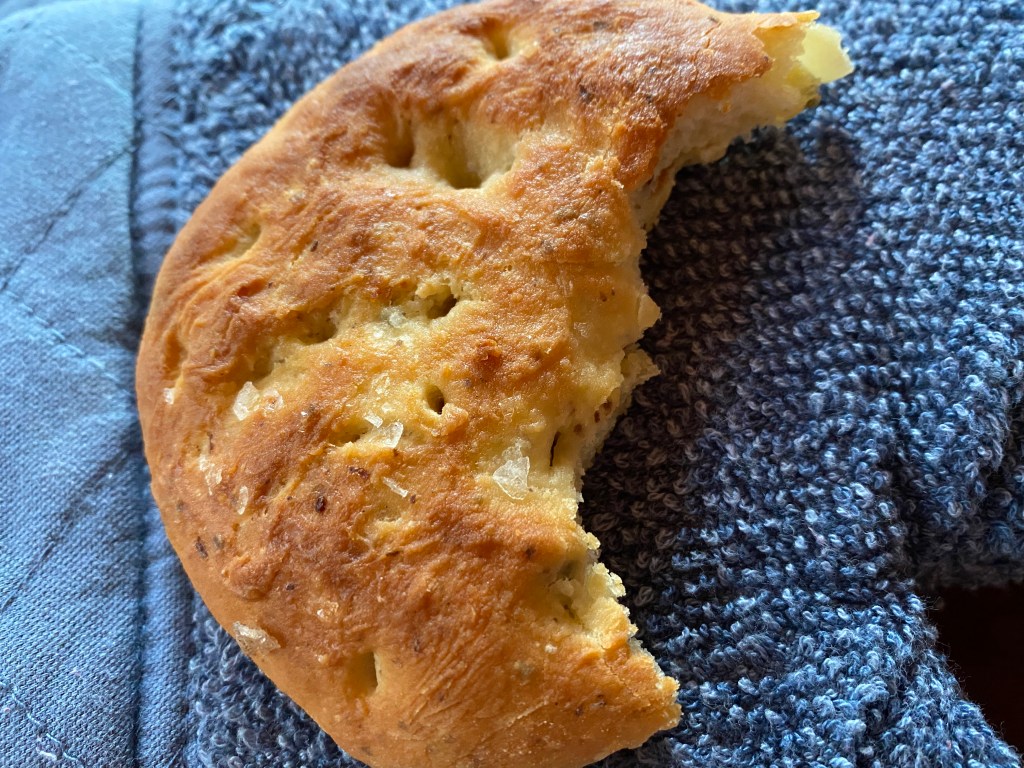
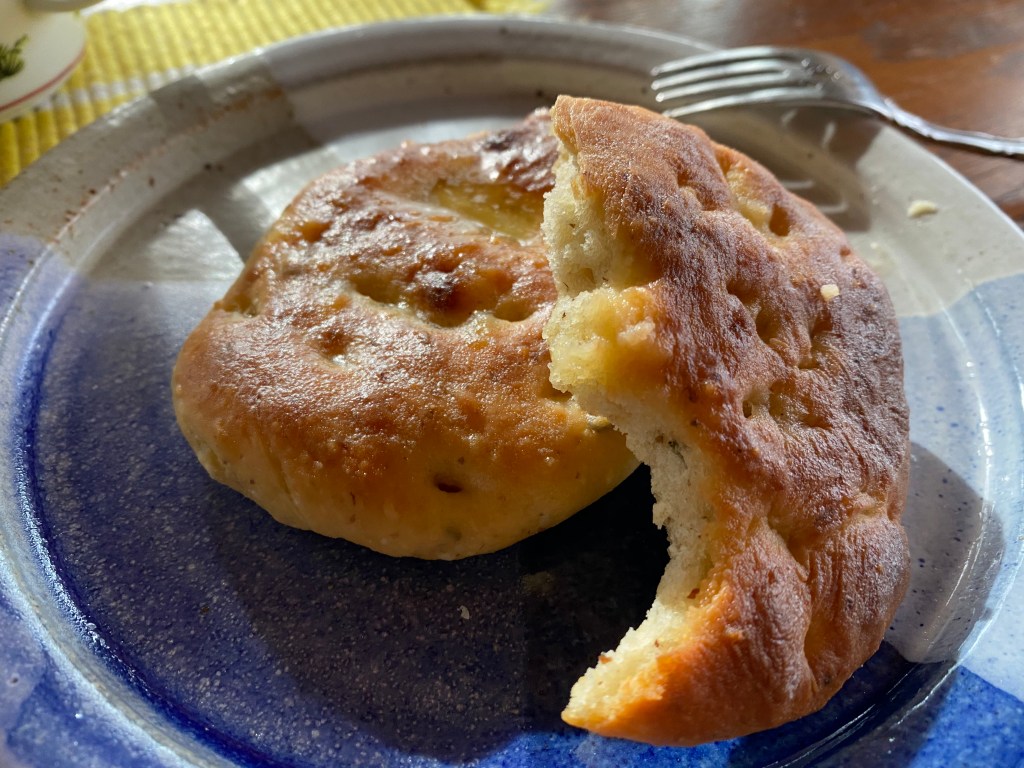
Hard to stop eating to snap a photo!


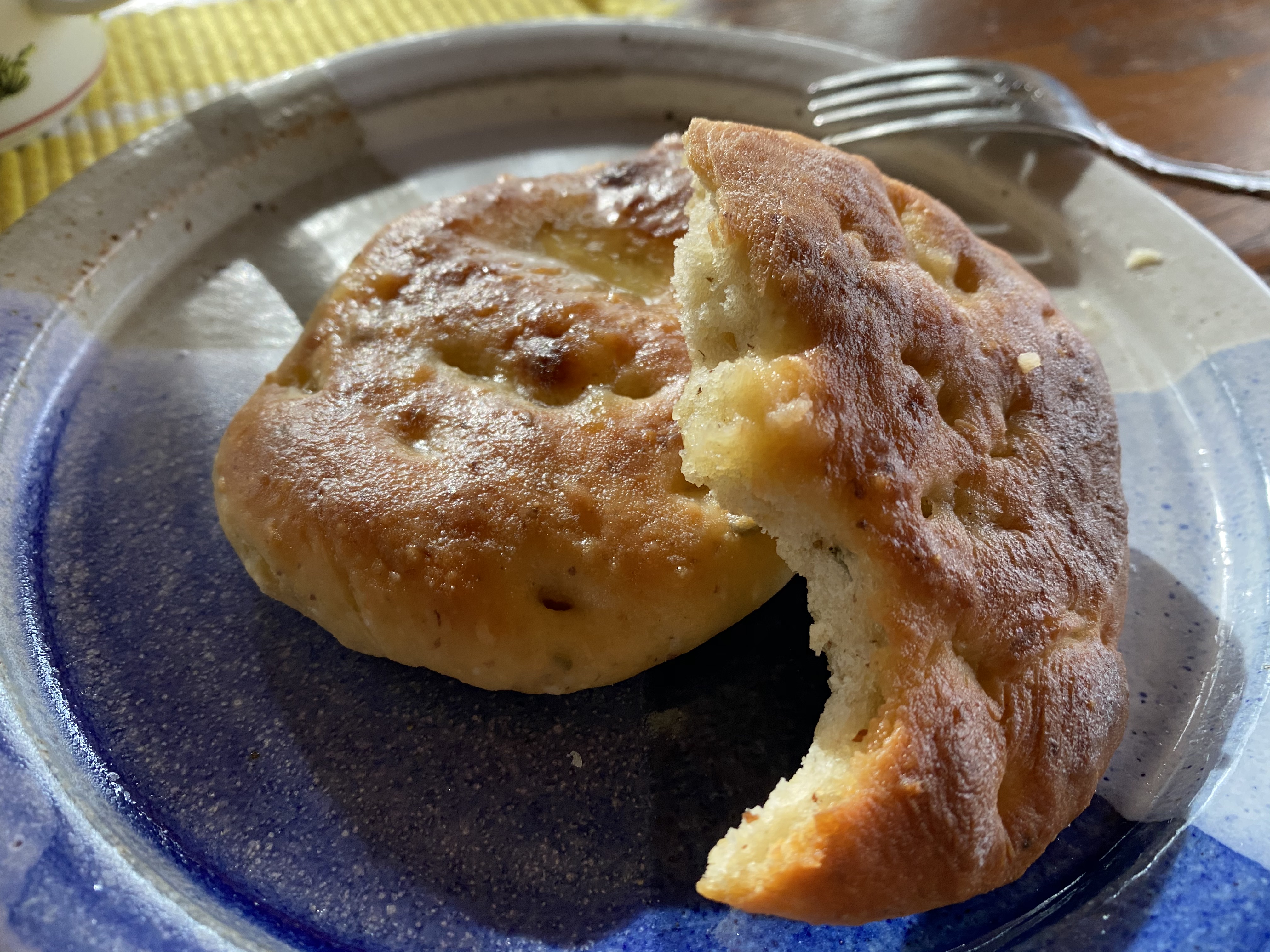
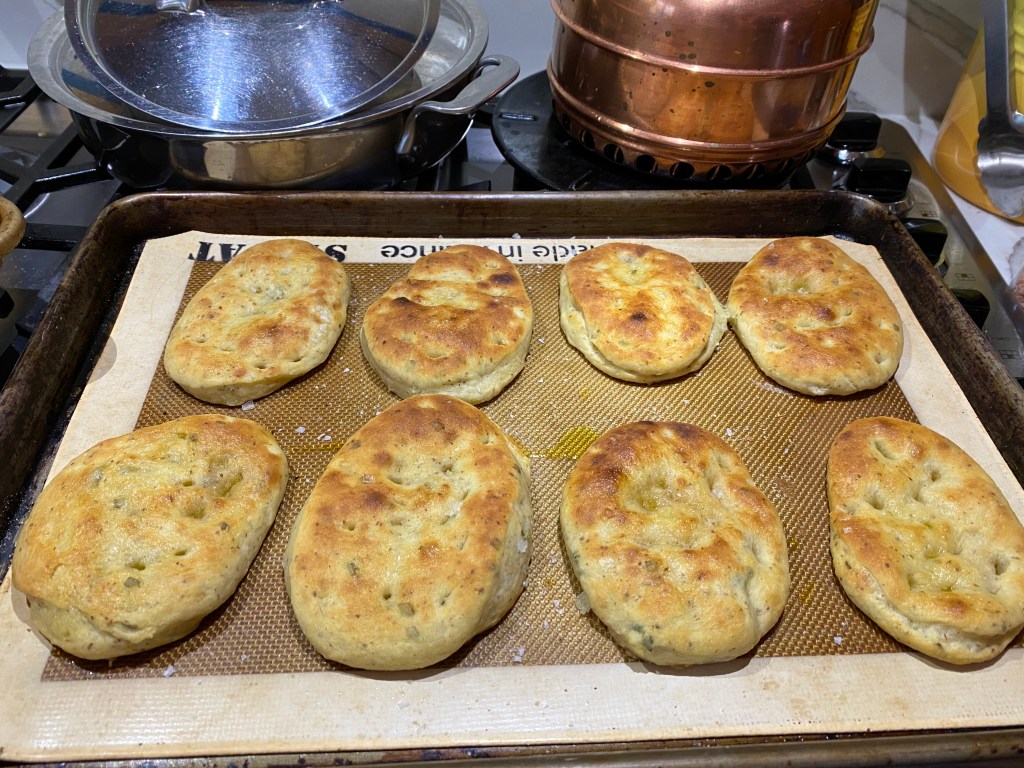
Pat from Feeding My Enthusiansms is our Kitchen of the Month for November 2020.  She found this recipe on My Pinch of Italy.  Now, let me say this may not be the be all to end all focaccias after all we’re not in Portofino, but it is totally beautifully worthy of your baking. I’ve alread found myself baking it for the third time and know it will be coming out of my oven again soon.  The sage is excellent! The small size is wonderful.

Potato Focaccine ~ BBB

Recipe By: Pat “Feeding My Enthusiasms” 
Yield: 12

150 g of yellow or white mealy potatoes
300 g of Italian flour 
100 grams Durum flour
1 teaspoon of salt
1 1/2 teaspoons dry active yeast
3 tablespoons of Evoo – Extra Virgin Olive Oil
200 grams Lukewarm water
10 fresh sage leaves chopped
Maldon salt, to taste

Peel potato. Boil the potatoes in plenty of unsalted water.

Whisk together flours, salt, chopped sage and yeast. 
Add lukewarm mashed potatoes, olive oil and lukewarm water to flour mix.

Alternate shaping: My total dough weight was 820 grams. Divided by 12 makes for 12 balls each weighting about 68 grams. Mine ranged from 67 to 70 grams.

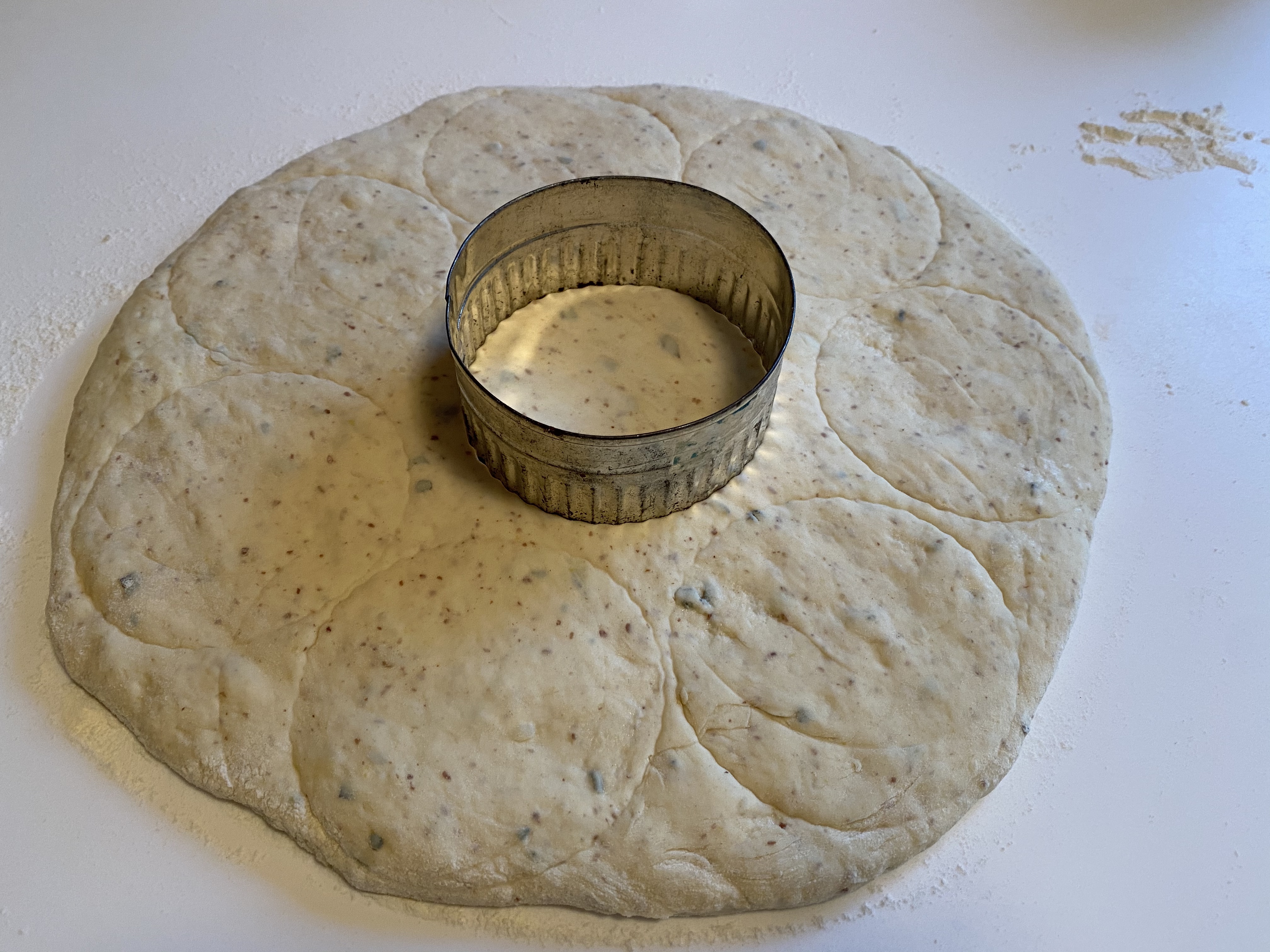
Pat the dough ball flat to about  1/2 inch – 3/4 inch thick. Use a large biscuit cutter and cut about 8 rounds of dough. The scraps of leftover dough divide and shape into about 4 more rounds. Place rounds  (stretch them out a little) on parchment lined sheet pan.  Dimple the dough with finger tips so the olive oil can collect in little puddles.  Allow to rest for another 30 minutes. 

Pour and or brush tops of disks with olive oil. Sprinkle with Maldon salt to taste.  

Bake at 180 ° C (160° C convection/fan) (350° F) for about 20-25 minutes, depending on your oven. 
Give them a moment under the broiler to give them golden brown color.
When cooked, flavor your focaccine with a drizzle of olive oil and more salt if needed.. 

Potato focaccine are good to eat freshly baked, however you can store them in a paper bag for a day.  I found these kept very well for several days.
These were excellent split in half and toasted.

Not to worry. YES you really should bake these! They are really that good. Check out the other Babes baking. Bake them for yourself and let us know what your experience was.

If you would like to be a Bread Baking Buddy, just bake by November 29th and send Pat an email with a photo and the URL where you posted. She will post the round-up as close to Dec. 1 as possible. Send your email to plachman at sonic dot net.

I look forward to how your little Focaccine turn out!


12 Comments

BBB ~ My Runza

I often wonder: How many changes/adaptations does it take to change a recipe from traditional/authentic to something else/mine? There must have been a time in the beginning that I followed a recipe to the letter because I have none of those romantic stories of learning to cook with my mother, grandmother or aunts or even my dad. Dad was the baker – he worked in a bakery for several years starting at age 17. Mom was the cook.

I mostly grew up in the 1950’s when “convenience” for the housewife was in vogue. I best remember two food items in my mother’s cooking. An extremely frequent fast and economical meal was a can of tuna mixed into a can of mushroom soup then ladled over minute rice. Yes, my brother, sister and I not only ate that but I believe it became comfort food to us. Yes, that really was the meal. Maybe I should suggest you take a deep breath or two to get around that. The second thing I remember about mom’s cooking was the fried chicken she cooked every Sunday after church. This was fried chicken for the angels. Totally, totally then and now the best fried chicken on the planet.

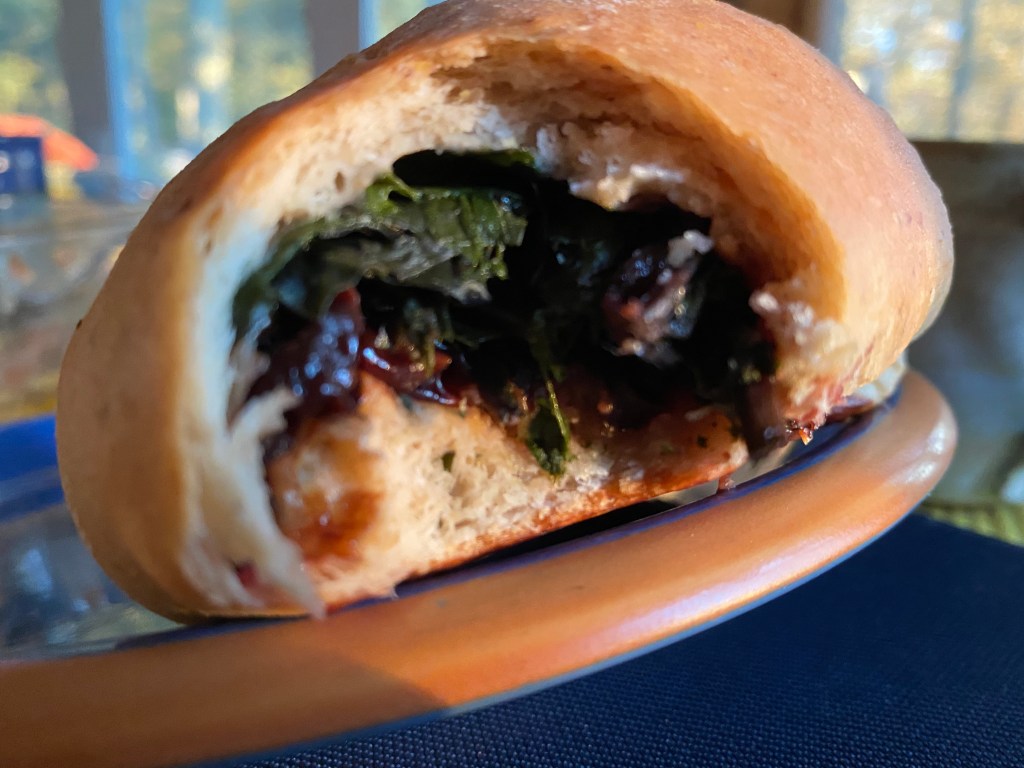
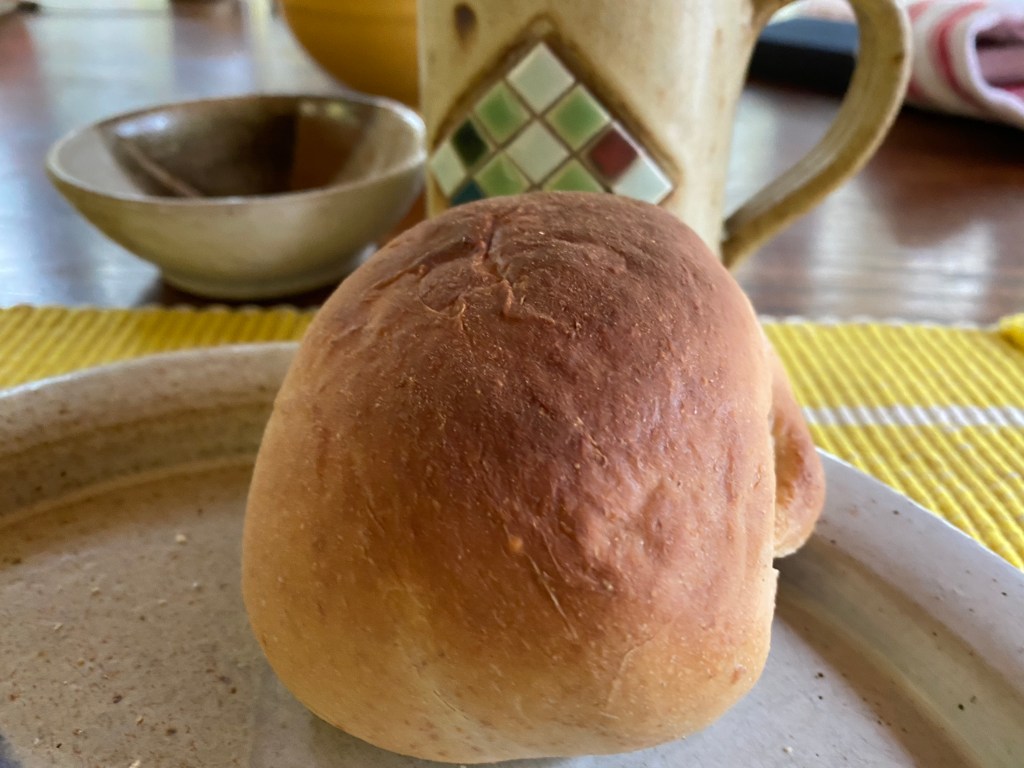
Simple outside hides such glories inside.

Now what has that got to do with the BBB Runza recipe that Kelly from AMessyKitchen brought to the kitchen table this month? Kelly gave us a great beginning story about Runza Rolls, brought to Nebraska and Kansas by immigrants, and the Runza Restaurant in Nebraska that is now on my Please can we go there list. Elizabeth from BlogFromOurKitchen then jumped repeatedly down rabbit hole after rabbit hole and really fluffed out a detailed story of Runza.

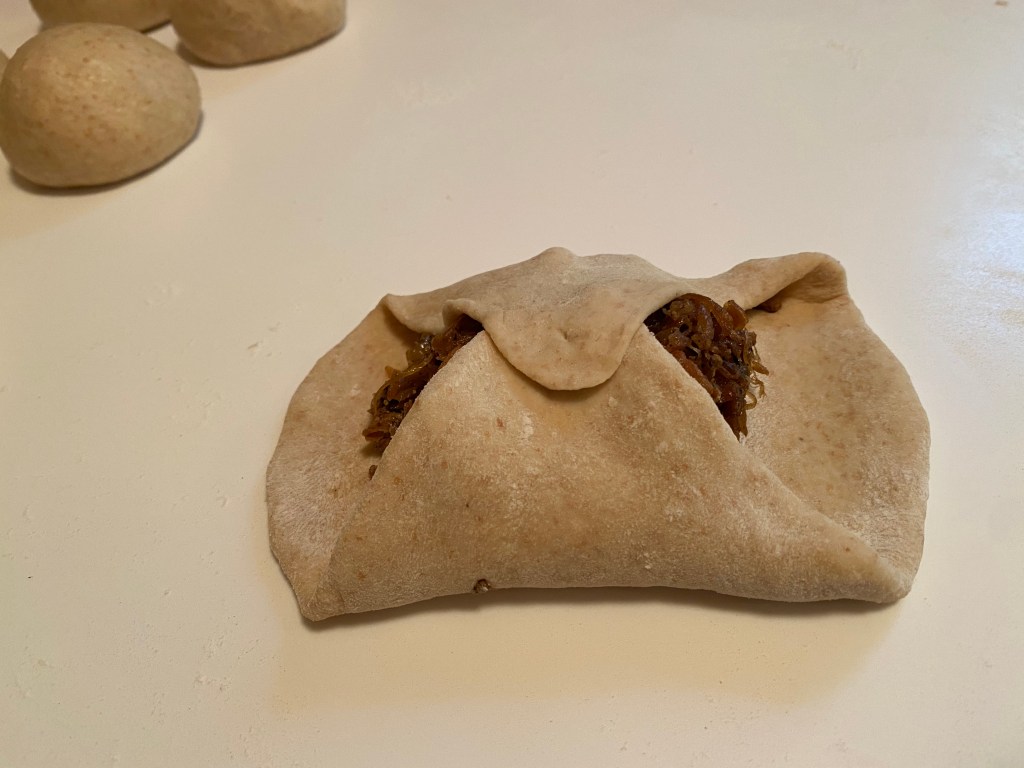
Bring two sides together.

I am going to refer you to Kelly and Elizabeth for the full Runza history. Here … well here I’m going to tell you my Runza is probably in name only, not traditional and not authentic. My rational for My Runza is I think immigrant cooks from 100 or more years ago probably made Runzas with what they had on hand many times and only got really set in stone when modern supply chains took over. That’s my rabbit hole and I’m in it.

Leave it thicker in the middle.

Gorn & I are absolutely in love with these. First, for the dough recipe I used an eBook, Shauna Sever’s Midwest Made: Big, Bold Baking from the Heartland. This dough is a dream.

Runza Dough
makes 12 rolls

2¼ teaspoons instant yeast
380 g unbleached bread flour
340 g sprouted wheat flour
45 g King Arthur Special Dry Milk
20 g ground flax
20 g brown sugar
1 teaspoon fine sea salt
380 g warm water (110° to 115°F/43° to 46°C)
113 g unsalted butter, melted
2 large eggs, at room temperature

Oil for bowl

Ground turkey, onions, sauerkraut.

Whisk yeast, flours, flax, dry milk, sugar and salt together.

Warm water then add melted butter and two eggs and mix.

Mix the dry with the wet ingredients and knead until you have a smooth silky dough.

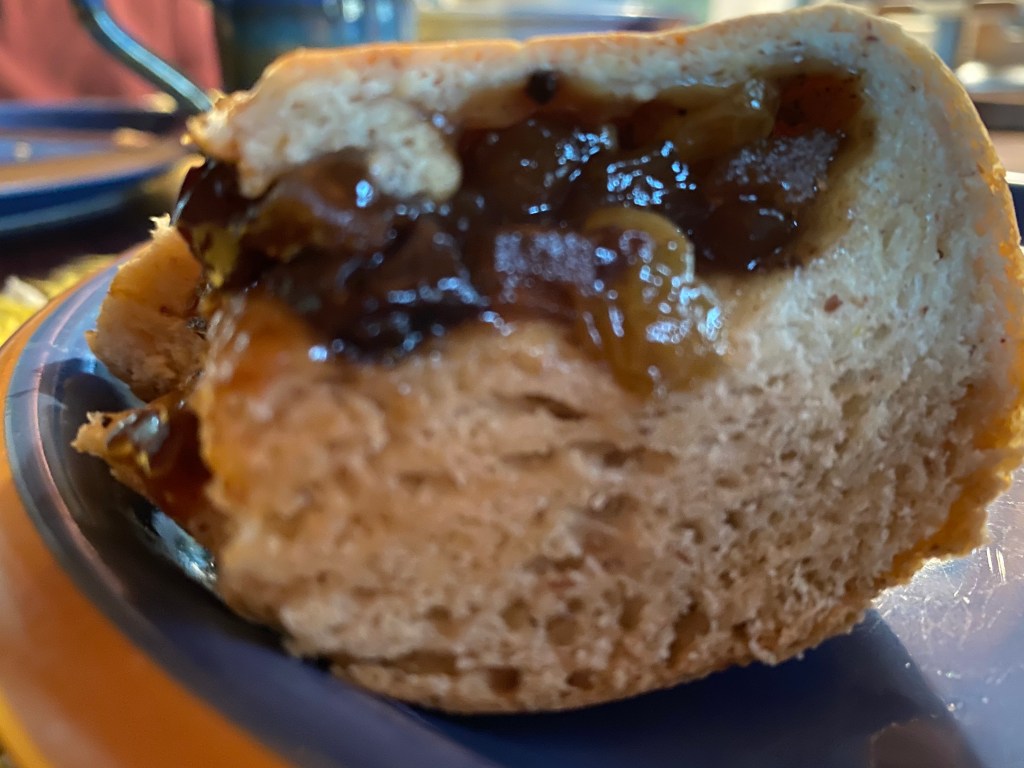
Mincemeat upside down. Dessert.

Allow to rest and rise in a covered oil bowl for 30 minutes. Gently give the dough a stretch and fold, return it to the oiled bowl covered for another 30 minutes.

Push the filling in at ends, pinch together gently and pull a little, fold into the middle.

My dough weighted 1368 grams; divided by 12 made each dough ball 114 grams. Yeah, I’ve gotten comfortable with weighting and pinching dough to get same size dough balls. That does not translate to all the rolls looking the same when baked.

Roll the dough ball to about a 6 inch circle. Thanks to a hot tip from Karen at Karen’s Kitchen Stories to leave the center of the circle thicker, I ended with a nice roll on the top and not a super thick bottom!

Use 1/3 cup filling for each roll. I pulled two sides together and then pushed the stuffing into each end and pulled the dough slightly then folded it to the center. Placed each roll on sheet pan lined with parchment.

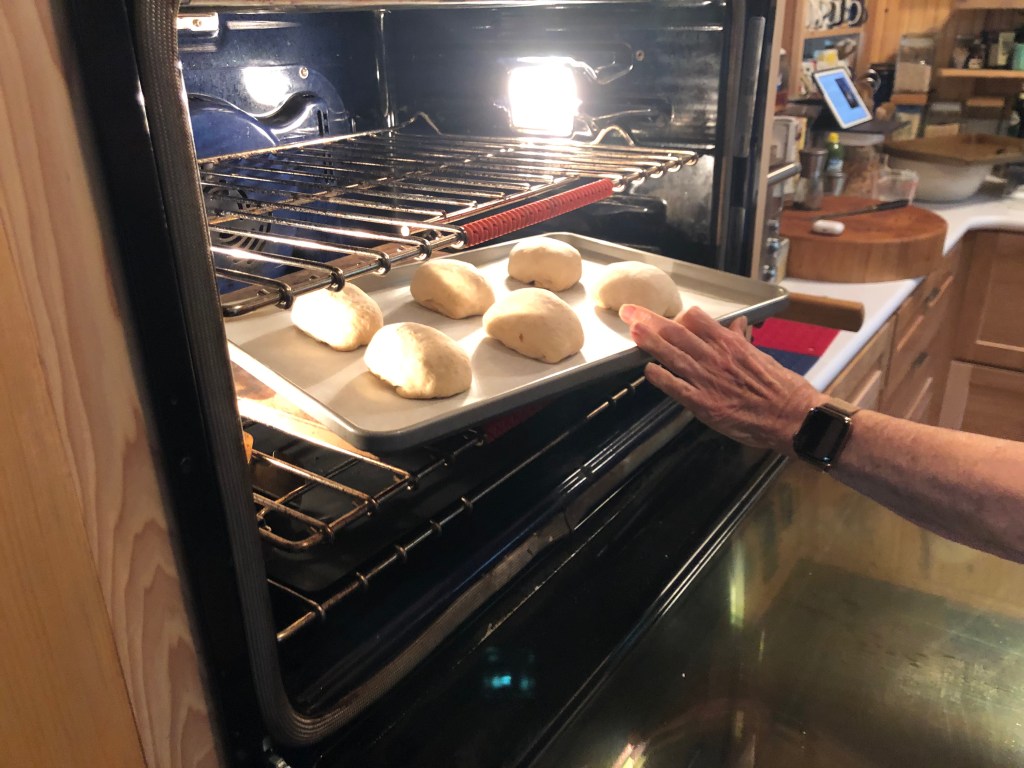
Bake at 350° for 20-25 minutes. Mine took about 23 minutes.

The first batch were ground turkey, onion, and sauerkraut! WOW they were great. I gave four away. We ate the remaining over the next four days. They reheated beautifully.

Yesterday, I made the dough again. I only made 3 (remaining dough overnighted in the fridge). Two rolls I filled with beet tops and one I filled with mincemeat.

Rainbows … the promise …

Tomorrow I have another plan entirely for the remaining dough…
Really you knead to knead these! Have you ever had a runza?  What is/would be your favorite filling?  Bake along with us this month and try it out!  No blog is necessary to participate, a picture will do. Just send a picture or your post of your finished flatbread to Kelly by the 30th of this month.  New recipes are posted every month on the 16th. Check out our Facebook group to see the participants’ baking results during that time.


9 Comments

BBB ~ Matar or Chola Kulcha

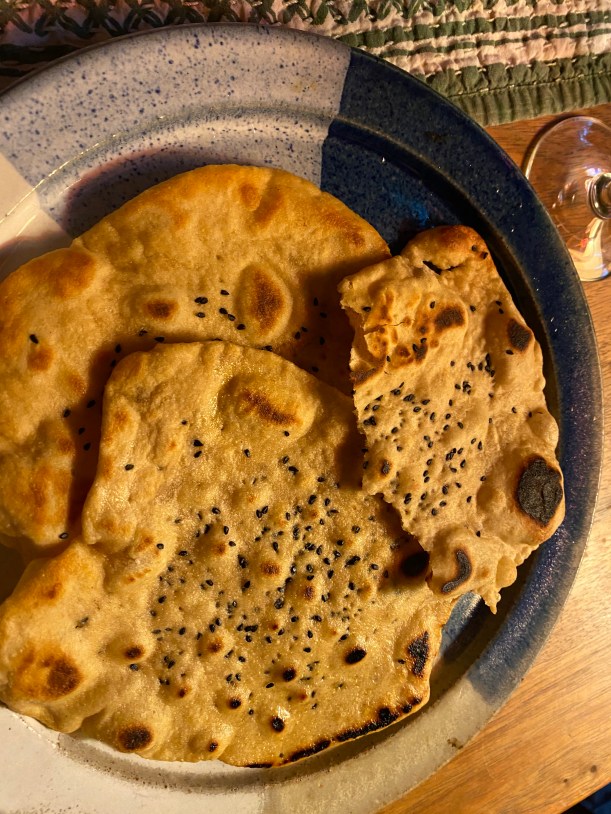
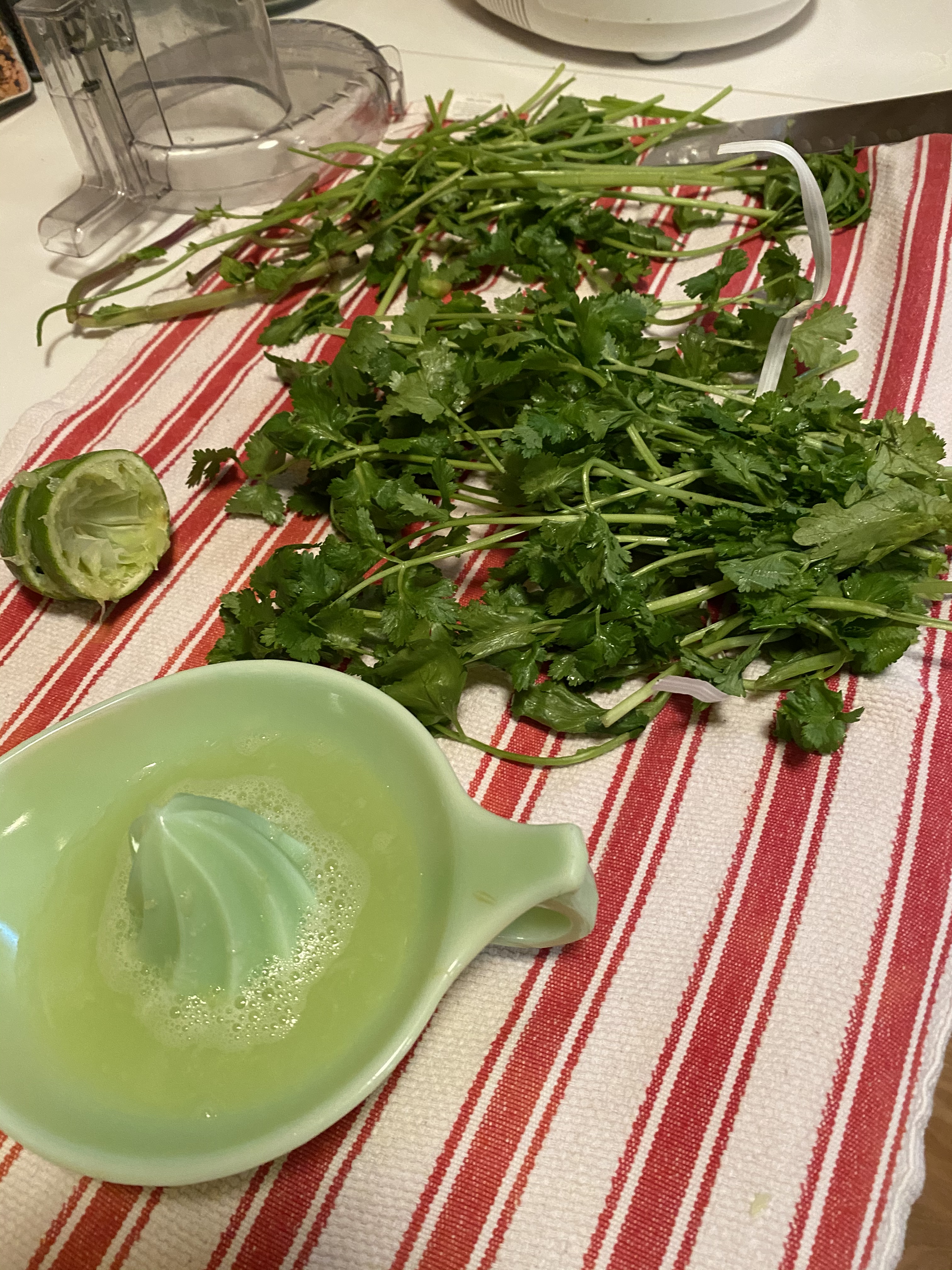
Really, who knew I didn’t understand I really love chutneys! Yes, I really know now I do enjoy at least Apruna’s chutney she had us make for this Indian flat bread Kulcha! Wow this was marvelous. OK, I will confess, I wasn’t expecting much from the chutney so the first time I made the Kulcha we had it with some wonderful chicken and it’s accompanying gravy. It was wonderful. Then I thought, OK, maybe since I have most of the ingredients I should give the chutney a try. The one ingredient I didn’t have the Tamarind; a search suggested lime juice as a substitute and perhaps in my lack of experience it worked for me. Aparna’s looks very liquid and she told us it should be liquid … but mine was thick and chunky, just like I like it. I made both the Green Mint-Coriander Chutney and the Sweet and Sour Tamarind Chutney. Both the Chutneys were terrific but the Green Mint-Coriander was gone the fastest. I will try to do the Kulcha again as I rolled mine very thin and didn’t get the puffy that most Babes did. I call this a success even though it’s not authentic … we really enjoyed!
Tradition says I should be round but dough most often has a mind of its own.

Aparna is our Kitchen of the Month so do check out her site for more authenticity than you’ll find here.

KULCHA (Flat Bread)

For the Khameer or Pre-Ferment :

1/2 tsp instant dry yeast

1 tsp sugar

1 cup flour – I used 1/2 cup white whole wheat + 1/2 cup all purpose

1 cup water

For Kulcha Dough :

All of the Khameer/ Pre-ferment 

1/2 tsp instant dry yeast

1 1/2 cups flour – I used 1/2 cup white whole wheat + 1 cup all-purpose

2 tbsp plain yogurt 

1/2 tsp salt

1 1/2 tbsp ghee (or soft unsalted butter)

More water, if needed for a soft dough

For the Topping :

Nigella seeds or black sesame seeds

Chopped fresh coriander leaves/ cilantro

Ghee or unsalted butter for cooking the Kulchas

METHOD :

For the Khameer/ Pre-ferment (previous night) :

Mix together the yeast, water, sugar and all-purpose flour till smooth in a big bowl. Cover and leave on the kitchen counter overnight to ferment. 

For the Kulcha Dough (some time next morning) :

The Khameer/ pre-ferment should have risen well and will appear quite stringy. Mix in the other 1/2 tsp of yeast, all-purpose flour, yogurt, salt and a little water. Knead till you have a soft, sticky and loose dough. You don’t need a mixer for this. Your hand or a dough whisk is enough. This dough came together easily and was smooth.

Add the ghee or soft butter and knead once again till well incorporated. Shape into a round and leave in the bowl. Cover loosely and let it rise till almost double in volume.  This should take between an hour and two. 

Knead the dough lightly to de-gas it. Then divide into 6 equal portions. I divided my dough into 8 portions. Lightly flour your working surface, if required, and roll out each portion into a circle or oblong of less than 1/4 “ thickness. Sprinkle some Nigella seeds and dried fenugreek leaves or coriander leaves/ cilantro and lightly press into the rolled out dough. 

Heat a griddle or flat pan and place the rolled dough on it. Sprinkle a little water on the sides of the griddle/ pan (not on the dough) and cover. Cook the flat bread for a minute or so. Now remove the cover and cook on the other side as well. If not serving immediately, cook till here and keep aside. When ready to serve proceed further with cooking in ghee or butter as follows.

Now I know I should have made the Matar/Chola (White Peas Salsa) … but I didn’t. That means I still have something to add to this and look forward to.

GREEN MINT-CORIANDER CHUTNEY

Grind together a handful of fresh coriander/ cilantro leaves and tender stems, equal amount of mint leaves, green chillies, salt and a dash of lime juice with very little water till smooth. 

This chutney should be savoury, on the spicier side with a little tang and a bit watery in texture. Adjust all the ingredients to taste. This will keep in the fridge for a week.

SWEET & SOUR TAMARIND CHUTNEY 

(Makes 1 medium jar)

INGREDIENTS :

1 cup tamarind pulp thick

3/4 – 1 cups powdered jaggery 

1/2 cup dates loosely seedless , finely chopped packed

2 tbsps golden raisins, chopped

1 1/2 tsps chilli powder (or to taste)

1 tsp cumin powder

Salt or black salt to taste

METHOD :

Put the lime juice and sugar in a pan. Over medium heat, stir the mixture till the sugar (jaggery) dissolves. Now add all the remaining ingredients and cook till the chutney thickens a bit and takes on a shiny appearance. Allow to cool and use as needed. This chutney keeps in the fridge for a while.

The amounts of tamarind, jaggery, chilli powder and salt may be adjusted as required. This chutney should be sweet, sour and spicy.

I highly recommend both these chutneys even if you don’t have tamarind.

These are so good and really simple to put together. As you can see, we enjoyed these first with a chicken dinner before I made the chutneys. But, the chutney is the way I do them from now on.

Check out Aparna for the Matar/Chola Salsa, I know that is in my future. She’s made it look too good to miss.

We’d love for you to join us this month for our bake!  No blog is necessary to participate, a picture will do. Just send a picture or your post of your finished flatbread to our host kitchen by the 30th of this month.  New recipes are posted every month on the 16th. Check out our Facebook group to see the participants’ baking results during that time.


2 Comments

Break Fast!

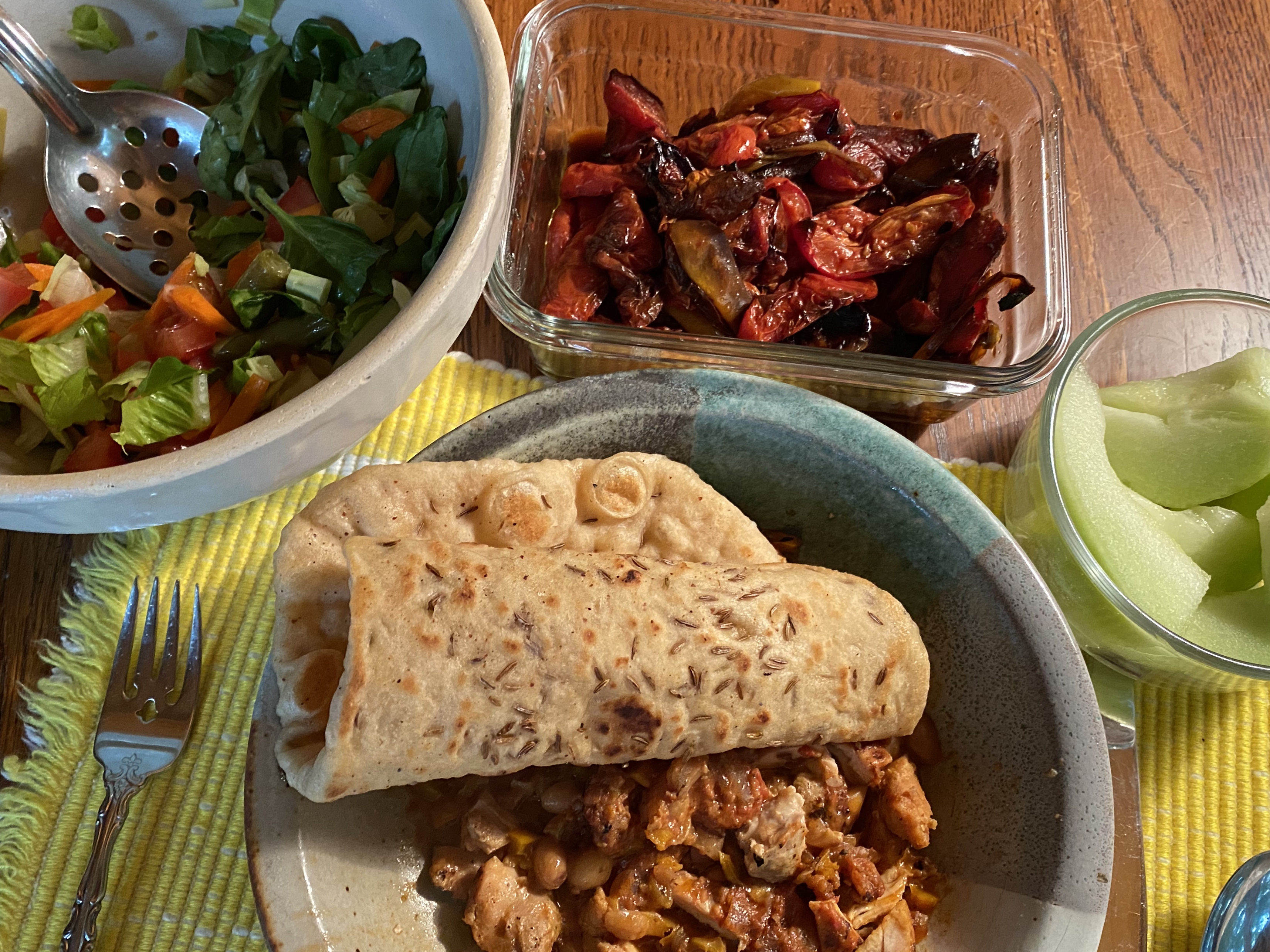
Our Break fast meal.

Recipe from: What’s in the fridge.

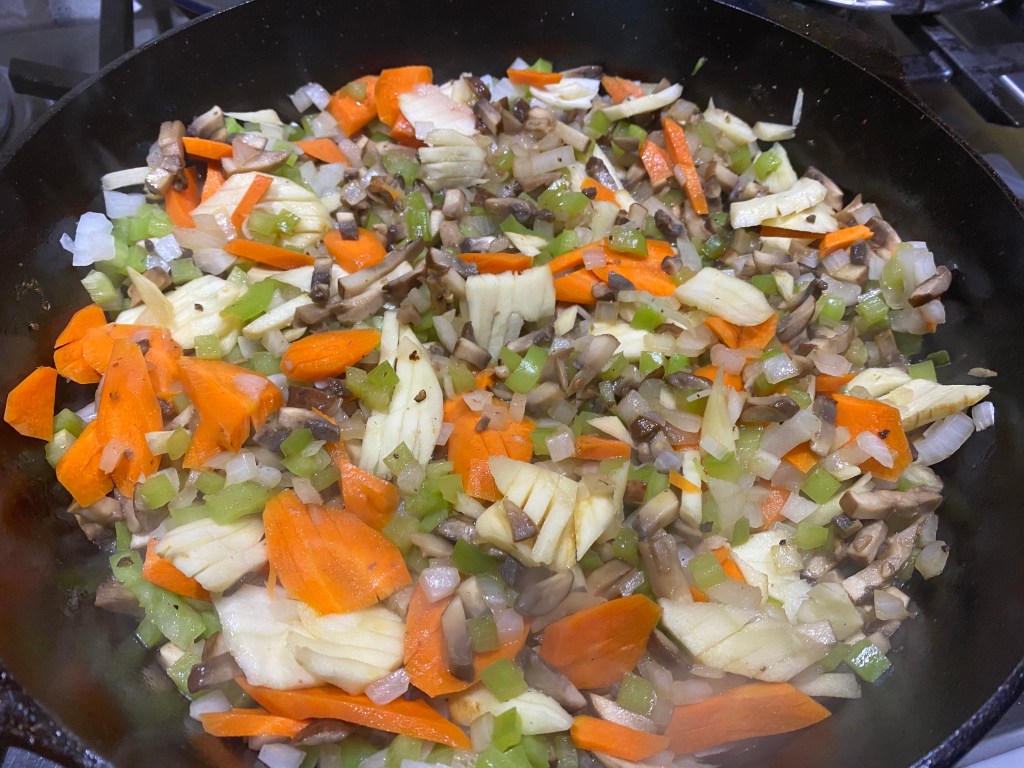
Sautéed cubanelle peppers, sweet onion, mushrooms, one carrot, one parsnip, 6 browned chicken thighs, one cup chicken broth. Topped with Apriums. Simmer 20 minutes.

WOW! It was “Are there seconds!”

Sautéed vegetables.
Ready!


15 Comments

BBB ~ Beet Bread

What little faith I had … scoring is intimidating. I’ve rarely gotten what I felt was good scoring.
I looked at several uTube videos … I looked at many images of bread loaves that had been scored … and I fretted … and I doubted and I bought a lame that allowed for a straight blade placement. Oh I doubted and fretted.    I doubted and fretted. How  I doubted and fretted. And then did it again. 
The recipe below was adapted especially heavily in the leaven due to my starter not traveling well. (Not traveling well translates to tipping over in an ice chest. Yes, what a joy to clean.)
Therefore my starter was not fully mature. I gave both the starter and dough a pinch of yeast.
Elizabeth directed that we use a “slack” dough. That immediately brought to mind visions of “The Infamous CROCK”. 
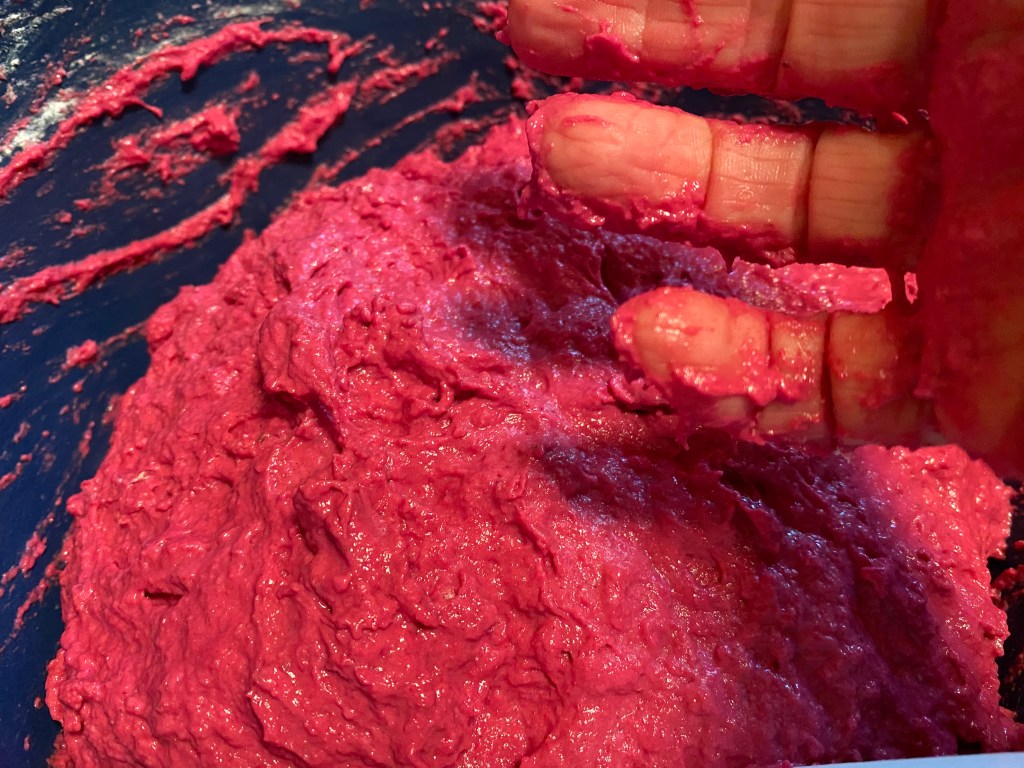
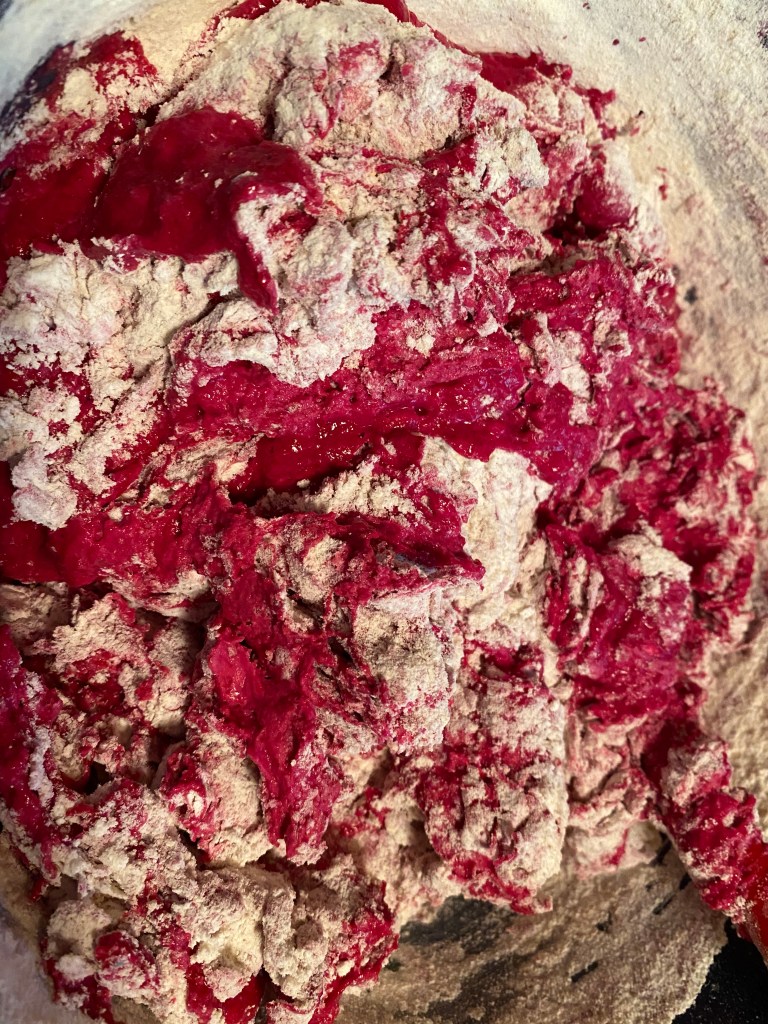
This is decidedly SLACK dough. Knowing I had a very immature starter, I gave this a boost with just a pinch of yeast, I allowed all the time … and then some. 


Sitting out on the counter, these were two flat and running out loose dough balls. Ball can only very loosely be used to describe the flat disks on the counter. There was no shape holding, there was no bottom seam when I poured this into the bannetons. The 16 hours overnight in the refrigerator gave no rise to either loaf. Gently easing the dough from the bannetons onto the peels resulted in flat 1 1/2 inch rounds of red dough.
Because of the way my morning was spinning frantically along, Gorn wanting sandwich bread and not something unknown … I didn’t really have time to do much thinking or planning about anything.
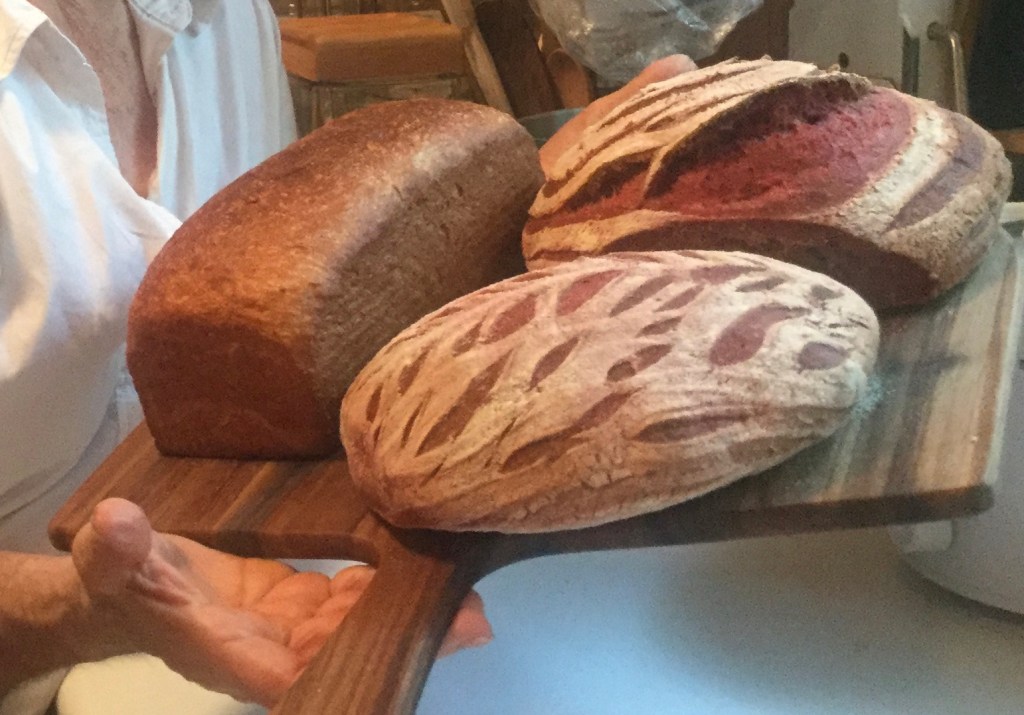
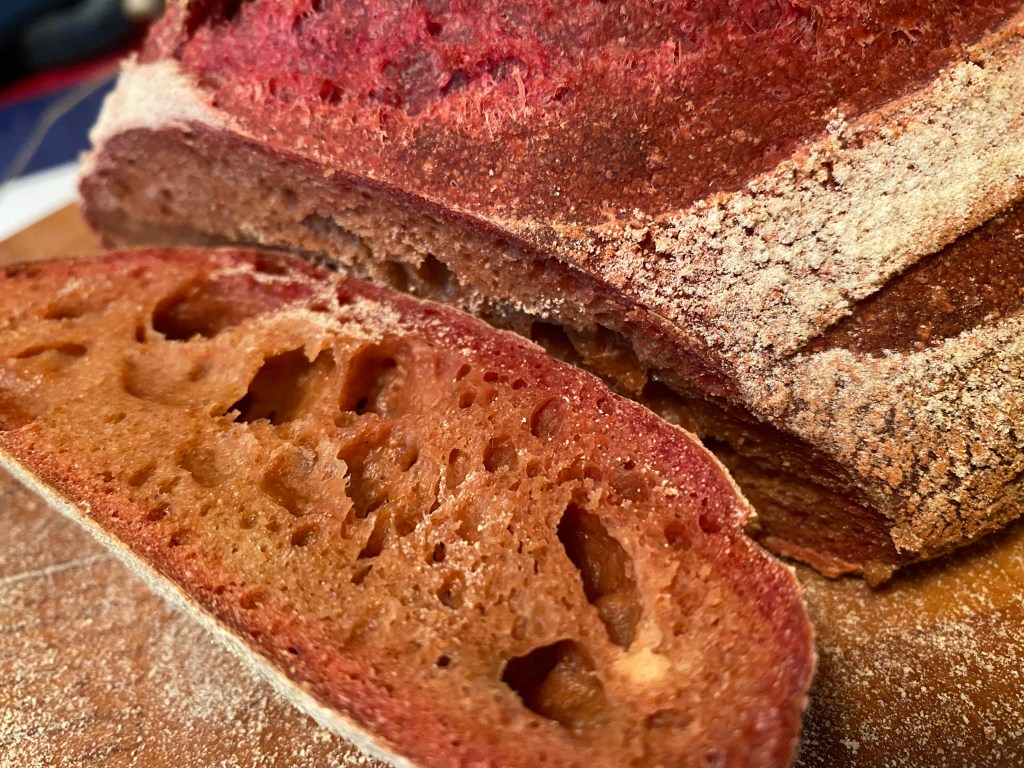
Suddenly … yes, suddenly, I found myself facing these two flat red dough balls and thinking “Just give them a couple of wacks and call it.”  Perhaps the Babe in me rebelled but regardless, I put the lame to it and in short order … I mean really short order without planning what would work or happen, I was putting two slashed loaves in the oven. BAM.
Twenty minutes into the bake I checked to rotate the loaves and was totally shocked to find amazing oven spring! Wow. And what is this, actual and something of reasonable scoring patterns. Maybe not what would be termed practiced or professional but for a first try, more than acceptable. DONE.

Now I can say, I am so very glad you put us up to this one Elizabeth. This is what is so good about this little group: Once again, you’ve put me up to something I would put off forever trying. A big thank you to our Kitchen Of the Month, Elizabeth.

Beet Bread

Recipe Adapted from Sourdough: Recipes for Rustic Fermented Breads, Sweets, Savories and More by Sarah Owens
Yield: 2 loaves

Beet Puree
600 grams fresh beets, weighted 1 1/2 beets
440 grams water
Leaven
60 grams 100% hydration starter
30 grams water 
pinch yeast
60  grams bread flour
Dough
ALL leaven
290 grams beet puree + the 440 grams water
550 grams bread flour
pinch yeast
145  grams whole wheat flour
35 grams medium rye flour
30 grams ground flax seed
15 grams sea salt

Directions:

1. Roast the Beets 450° F oven
Place beets in covered baker 45 -60 minutes.
Cool.
Rub skins off.
Put 290 grams of beets into blender with water; blend to smooth slurry. (An aside: Why does the ingredient list call for 600 grams fresh beets and then the directions call for using only 290 grams? I made pickled beets because Gorn loves them.)

2. Build Leaven 8-10 hours.
Stir starter and water to form slurry.
Add flour and stir till smooth.
Allow to ferment at room temperature.

3. Build the Dough Mix beet puree with leaven and combine. 
Add flours & mix to completely hydrate with no lumps.
Autolyze for 20 minutes before ADDing salt.
Sprinkle salt over dough and mix thoroughly until completely incorporated.
Cover.
Allow to bulk ferment for 3-4 hours.
Stretch and fold every 30 minutes building dough strength.

4. Shape Dough Lightly flour the counter.
Divide dough into two pieces.
Preshape into balls, cover and allow to rest 10 – 30 minutes.
Final shape the dough and place seam side up into well floured bannetons.
Cover and retard for 8 to 12 hours overnight in the refrigerator.

5. Bake on preheated stone Remove the loaves from the refrigerator at least an hour before baking.
Preheat oven to 550° F  at least 30 minutes – long enough to turn croutons into charcoal briquettes and totally smoke up the kitchen …
When the oven is read, turn the loaves out onto peels well covered with semolina flour.
Score the loaves.
Spray the oven walls and slide the loaves onto the hot bake stone.
Spray the oven walls 3 minutes twice.
Turn the oven temperature down to 450°F 
Bake another 25 to 35 minutes or until internal temperature reaches 205°F. Should sound hollow when thumped on bottom.

6. Considerations The sugar in the beets may tend to brown the crust quickly so watch closely, rotates the loaves and if it begins to darken too much you may cover in foil to keep from burning.

This month’s bread isn’t really about the recipe (but this was really really great bread) it’s about taking a deep breath with lame in hand and just give it a go. Bake with us. Stop doubting. Deep Breath … SCORE!

We would love for you to try out some decorative scoring with any recipe you like and join in as a buddy baker this month!  You don’t have to have a blog to participate, a picture will do.  Just send a picture or link to your post of your finished loaf to  Blog from OUR kitchen by the 29th of this month.   New recipes are posted every month on the 16th.  Check out our Facebook group to see the participants’ baking results during that time.


14 Comments

BBB ~Birotes Salados ~ Mexican Sourdough Rolls

Recipe By: Karen: Karen’s Kitchen Stories
Yield: 8 rolls

Our lovely Kitchen of the Month for this toasty July was Karen of Karen’s Kitchen Stories.  Karen’s choice came from a very exciting new book “Bread on the Table by David Norman. I am very happy to have her introduce us to both this recipe and this book.

We loved eating these rolls. We loved the very untraditional use of BLT sandwiches I made with them. I will make these again. But for the life of me I could not bring myself to do that massive Wake Up Feed for Your Starter because then I would have no idea what to do with all that 500 grams of starter that didn’t go into the Final Feed. I did my 50, 50 feed and used 20 grams of that in the Final Feed.
For some reason this recipe reminded me of Julia Child’s line about “you’re not standing around holding hands with the dough” … I actually thought I was holding hands with this dough for a number of steps. All that stretch and fold, it’s worth it.

I very much liked the idea of adding some citrus to these and so I squeezed a lemon and used the juice to brush these after shaping and before slashing. I baked these in two batches in the oven. The second baking rose a little more and got darker indicating to me I rushed more than I should have baking the first batch. These are slow rising, give the wild yeast time to do their thing.

Wake Up Feed for Your Starter
200 grams (7 ounces) sourdough starter, because you will be feeding it twice, it doesn’t matter what hydration it is to begin with.
200 grams (1 1/2 cups) all-purposed flour
120 grams (1/2 cup) lukewarm water (90 degrees F)
Final Feed
20 grams (1 tablespoon) of the “wake up feed”
270 grams (2 cups plus 1 tablespoon) of all-purpose flour
175 grams (3/4 cup) Mexican lager beer (I used Sam Adams)
Final Dough
230 grams all-purpose flour, (total flours in cups = 3 1/3 cups) 
200 grams white whole wheat flour
20 grams (1 tablespoon plus 1 teaspoon) granulated sugar, I omitted
18 grams (1 tablespoon plus 1/2 teaspoon) salt
All of the starter
212 grams (3/4 cup plus 1 tablespoon) water
Extra flour for dusting

Mix the “wake up feed” in a clean bowl with your fingers, cover with plastic wrap or a damp tea towel, and let ferment for 8 to 10 hours.

I refreshed my starter and skipped the above: Mix the final feed ingredients with your hand until well incorporated. Cover and let ferment at room temperature for 12 hours.

Whisk together the flour, and salt in a large bowl or dough rising bucket. Divide the starter into small pieces and add it to the dry ingredients. Add the water and blend everything together with your hands. “Stir, squeeze, and pinch” the dough ingredients together until the dough comes together. You can use your dough scraper to help incorporate everything. This process should take about 2 minutes.

Turn the dough out onto a clean work surface and stretch, fold, and flip the dough about 5 times.

Form the dough into a rough ball and place it back into the bowl. Cover and let rest for 15 minutes.

Lightly flour your work surface and place the dough, seam side up, onto the surface. Gently flatten the dough into a 2 inch thick circle. Stretch and fold the dough from all four “sides.”

Flip the dough over and form it into a ball, return it to the bowl, cover, and let rest for 15 minutes.

Repeat the stretch-and-fold process three more times at 15 minute intervals.

After the final stretch and fold, place the dough back into the bowl, cover with a damp towel, and let rise in a warm place for about an hour, until doubled.

Turn the dough out onto a lightly floured work surface with the smooth side down. Gently flatten until the dough is about 2 inches thick. Gently stretch and fold one side of the dough about half way over the dough. Turn the dough, and repeat from all four “sides.”

Flip the dough over, seam side down, and form the dough into a ball.

Return the ball to the bowl, seam side up, and cover until doubled, about an hour.

Lightly flour your work surface.

Divide the dough into 8 pieces, about 150 grams each. Form each piece into a ball. Press each ball into a rough rectangle and then fold fold each “side” over each other to create a cylinder. Using your hands, roll each cylinder back and forth until you have an eight inch long roll with tapered ends.

Heat your oven to 475 degrees F with a baking stone and steam pan.

Place the rolls, seam side up, side-by-side lengthwise, between the folds of a couche or flour dusted tea towel to proof. Cover with plastic wrap or another towel for about 60 to 90 minutes, until puffy and airy, but not doubled.

You will probably need to bake these in two batches unless you have two ovens.

Place the risen rolls onto parchment paper on top of a pizza peel, seam side down with space in between. Add 2 cups of boiling water to your steam pan and close the oven door to let it get steamy.

Score the rolls with a sharp knife or lame the length of the roll down the center with the blade at an angle.

Place the loaves on the stone, along with the parchment, and close the oven door. If you like, you can also spray the oven with more water to get it extra steamy.

Lower the oven temperature to 400 degrees F and bake the rolls for 20 to 25 minutes. They should be deep golden brown and hollow sounding.

Cool on a wire rack. Repeat with the rest of the rolls.
These are traditionally filled with pulled pork and lots of the au jus … not the kind of sandwich I needed for a boat ride. That’s why you see I made BLT’s. They were marvelous!!

If you bake along, just drop Karen an email(find her here) and she’ll put you in a roundup after the 1st of August. Please use BBB Buddy as the subject line. 


13 Comments

BBB ~ Bee Keeper’s Pain de Mie

Several years ago, maybe you remember, I was lucky enough to travel the short distance from Seattle to the King Arthur Flour Baking School in Skagit Valley, Washington for 4 days of baking with whole grains.  The day before my class started Martin Philip had been doing a workshop for several days with professional bakers. He had left behind several, no make that many of his Powerbrot loaves.  I don’t remember just how many I allowed myself to take before I felt too ashamed to take more but the number must have been over 6. Powerbrot is heavy with whole grains and rye. It is a heavenly loaf; absolutely perfect for breakfast and certainly with morning coffee and afternoon tea.

But that is not to be the June Babe Bread.  Just a short time ago in the mists of all this virus fun, I was talking with a friend who really loves rye, so I baked a great rye loaf which they did enjoy. My friend came up with TP and bleach which I hadn’t been able to come up with so my next thought was I need a totally different bread experience to share.  In surfing around King Arthur’s web site, I came across this recipe.   Which I baked…and I was blown away by. I mean me the original whole grain baker who shuns very much white flour. Now truth be told I did fiddle with the recipe and it did end up with some small amount of whole wheat in it but for me it is ridiculously white.  

My adaptation: 13X5 pullman pan – one loaf –
200 grams white whole wheat flour, my substitution
500 grams King Arthur Unbleached All-Purpose Flour
25 grams wheat bran, my addition
2 1/2 teaspoons salt
1 1/2 teaspoons instant yeast
227 grams (227g) lukewarm water
1/2 cup (113g) milk, at room temperature
3 tablespoons (64g) honey
7 tablespoons (99g) unsalted butter, at room temperatureI followed the directions on the web page.
OK. That recipe made a big loaf, that recipe is for the large 13X5 pullman pan. To bake this for my friend and then again for us, I wanted to be able to bake this in my smaller pullman 9X5 pan. At some point it occurred to me to look at Martin Philip’s Breaking Bread to see if he had a recipe there.  HaHa this is one he created for his bid for the 2016 Coupe du Monde de la Boulangerie.  The recipe in the book uses a biga – bingo, got to be even better than the straight dough recipe on the web site.  Alass, the recipe in the book also was for two loaves.  HaHa, a simple call to the Baker’s hot line and I had the simple answer to my problem. “Just divide every ingredient in half and it will fit into the smaller pullman”! 
I bake a loaf. I gave it to my friend – in a wild spy like pass off where we kept social distance, wore masks, I put the loaf onto her towel in the trunk of her car, backed off and then she wrapped it and drove away.  Next morning, 7:30AM, I mean I’m still in bed, I get this gushing crazy phone call about the most wildly incredible bread and then dramatic photos. 

We all need white bread from time to time…or at least mostly white bread. You will note I do add a little white whole wheat here.  And I will also tell you, I am going to be baking some altered iteration of this recipe to do it with a biga next week.

Below you will find mostly the recipe from the book, I simply divided it in half for my friend.  I oddly had durum flour BUT King Arthur said bread flour is a good substitute and that’s what I’ll be using now as my durum is gone. We are Babes: feel free to bake from the book recipe, the web site recipe or the whole wheat recipe from the website. 

I’m excited as always on the 16th of the month to see where the Babes take this recipe and expect Babe Variety to showcase an amazing bread. For me, a major draw of this bread was the honey … but I can tell you already a number of the Babe’s went strong for the tea and lavender. I’ve ordered lavender as I know I must give that one a try.

Photo by Friend Mary J.

Bee Keeper’s Pain de Mie

Adapted from Breaking Bread by Martin Philip 

Martin Philip’s book Breaking Bread: A Baker’s Journey Home in 75 Recipes has some of the best reading I’ve seen in years and maybe ever. 

Ingredients: below are the measurements from the book; you must divide if you want only one smaller loaf. 

Breaking Bread – two 9X5 pullman pans
******** TOTAL AMOUNTS USED IN BIGA + FINAL DOUGH
410 grams durum flour
410 grams AP flour352 grams water172 grams wildflower tea (lavender) 17 grams salt, fine16 grams yeast123 grams butter

******** BIGA******** 
410 grams AP flour(I used white whole wheat here)
246 grams water
pinch yeast
******** WILDFLOWER LAVENDER TEA********170 grams milk35 grams honey, subtracted 57 grams sugar, increased honey4 grams lavender  2 grams chamomile flowers******** FINAL DOUGH FORMULA********172  grams wildflower tea656  grams Biga (all above)106 grams water410 grams Durum flour or Bread flour123  grams butter17 grams salt, fine16 grams yeast
Directions:

DAY ONE – BIGA Combine the flour and yeast in a large mixing bowl. 
Add tepid water (75-80°.  Mix briefly, then knead until a smooth dough forms.
Cover and set at room temperature for 12 to 16 hours.

WILDFLOWER LAVENDER TEA ~ I have not used the chamomile and lavender. One day I will make it with lavender. Combine milk, honey in a small pot.
Over low heat, warm the mixture so the honey mixes into the milk.
When there are small bubbles around the edges add the chamomile and lavender if using.
Turn off the heat.
Cover and allow to set at room temperature 12 to16 hours.
Strain before using.
Warm the tea to 80° when ready to use.

DAY TWO FINAL DOUGH
Ending desired dough temperature: 80°.Combine strained Tea, all the BIGA and the water.Mix until the biga is broken up.Add very soft butter, flour, salt and yeast.Stir until the dough forms a shaggy mass.Resist the urge to add more flour.
BULK FERMENTATION Cover and allow to rise for about 90 minutes.
FOLDFold after 30 and 60 minutes; then leave untouched until divide.

DIVIDE AND PRESHAPEDivide the dough into 2 pieces which will weight approximately 750 grams each.Preshape as tubes. Cover and rest 15 minutes.
SHAPEButter or spray two loaf pans or two 9×5 inch pullman pans.Shape as pan loaves.With the long side facing you, fold the bottom third of the dough up to the center and the top third over (like a business letter). Fold the dough in half lengthwise, and seal the edges with the heel of your hand.Place in pans seam side down. Press dough into pans to evenly fill to all corners.
PROOFFor loaf pans: Cover and proof until dough is about 1 to 1.5 inches above top of pan: about 60 – 90 minutes.For pullman pans: Place the dough seam-down into the pan, and press it evenly into the corners. Put the lid on the pan and close all but an inch or so in order to monitor the loaf as it rises.
Allow the dough to rise until it’s just below the lip of the pan, 60 to 90 minutes.

Towards the end of the rising time, preheat the oven to 425°F.

BAKE Close the pan lid completely, and put the pan in the oven.

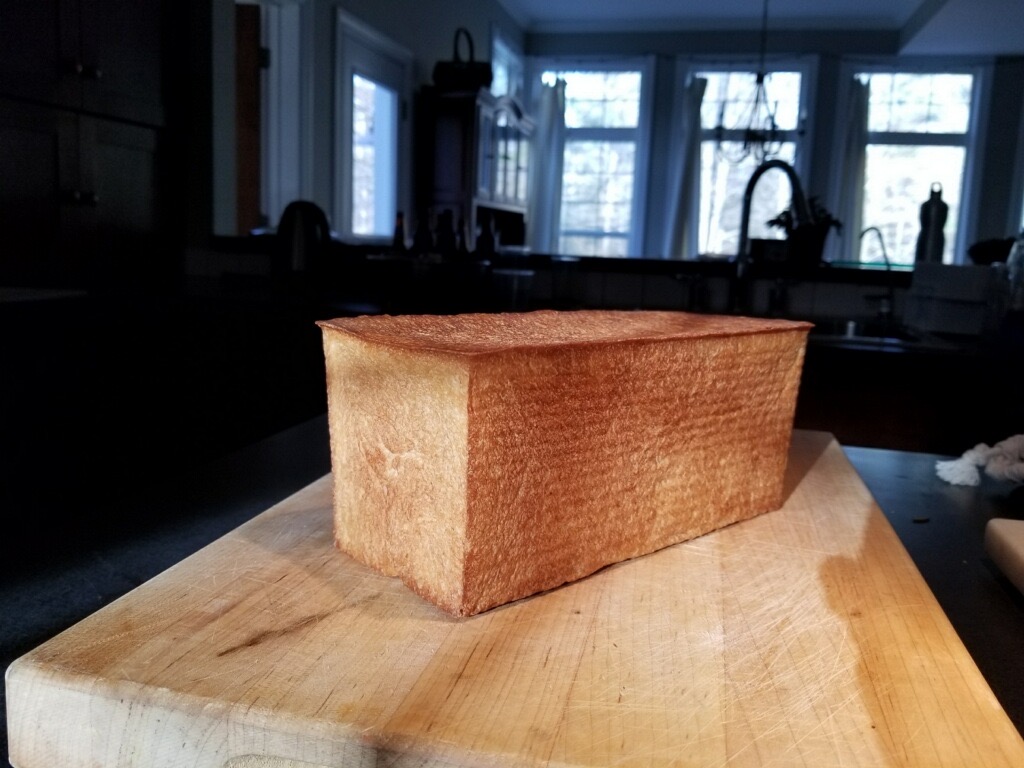
Pullman pan with lid on. I love this pan.

Bake the bread for 20 then remove the lid and bake for an additional 5-10 minutes. The loaf should be a deep golden brown on all sides.

Remove the loaf from the oven and, after 5 minutes, turn it out onto a rack to cool completely. Do not allow to cool in the pan as that will result in a soggy crust.

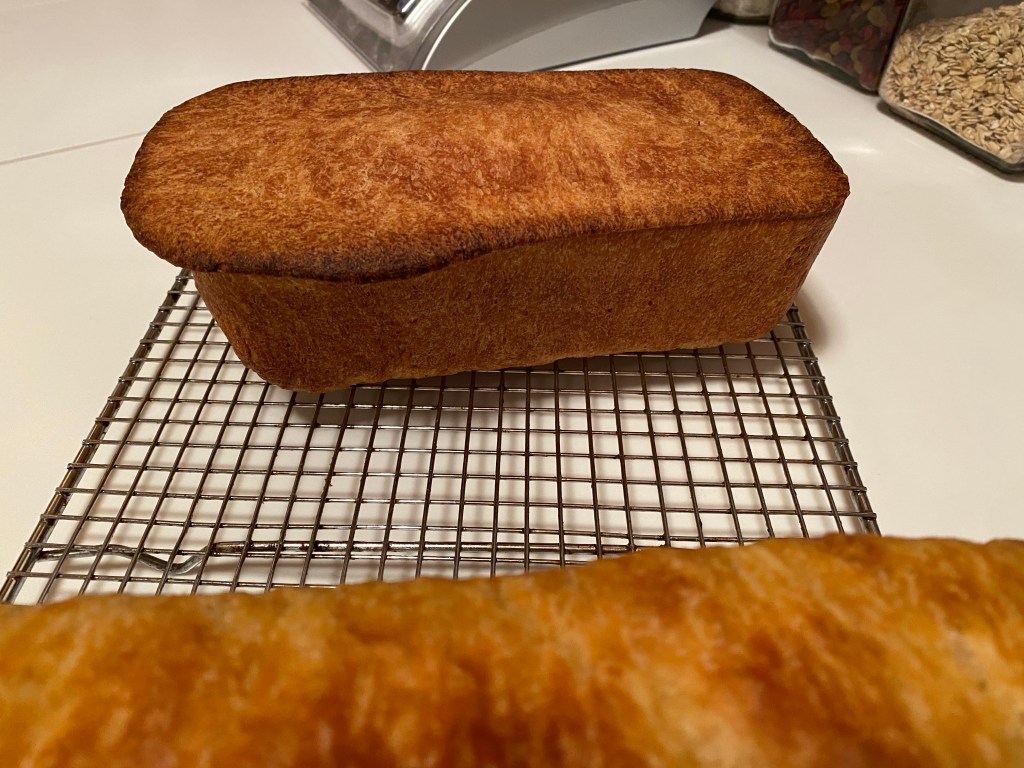
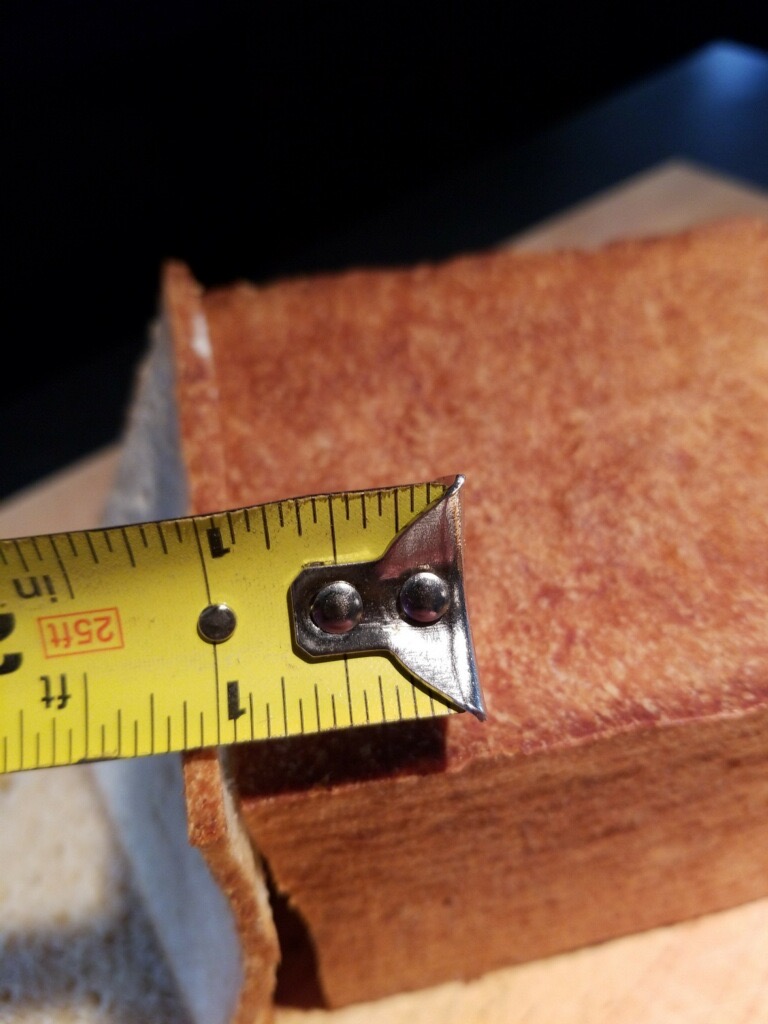
Don’t have a pullman pan; it makes a beautiful regular loaf!

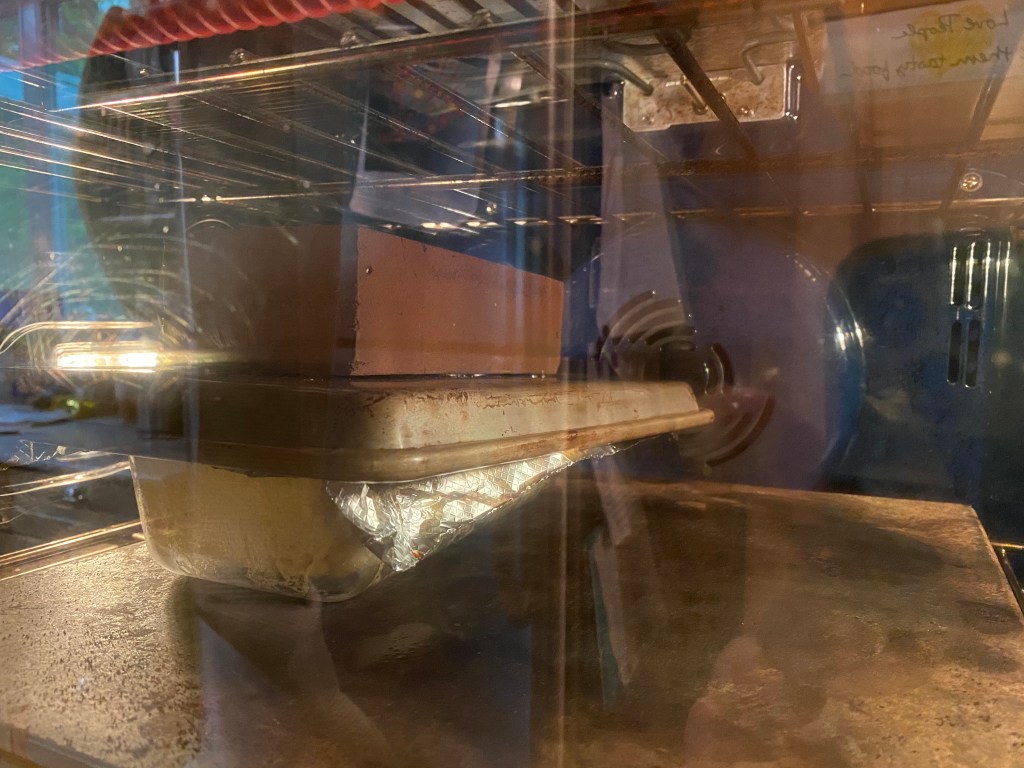
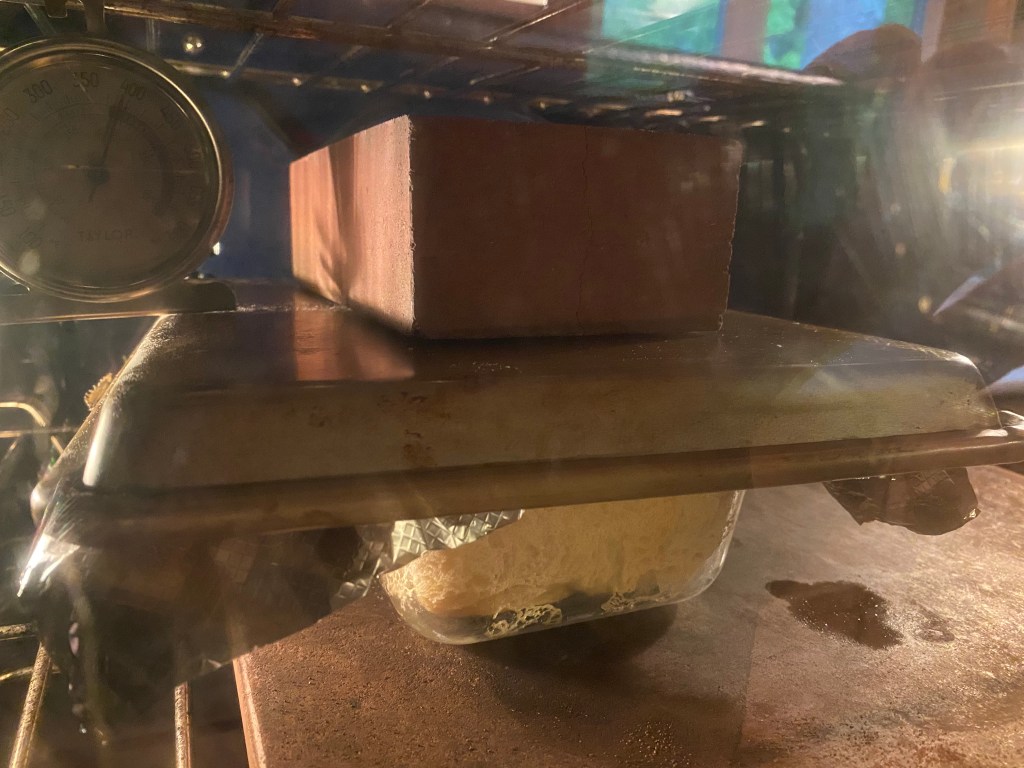
You may find one brick allows the dough to slip out one end, It’s still a stellar loaf!
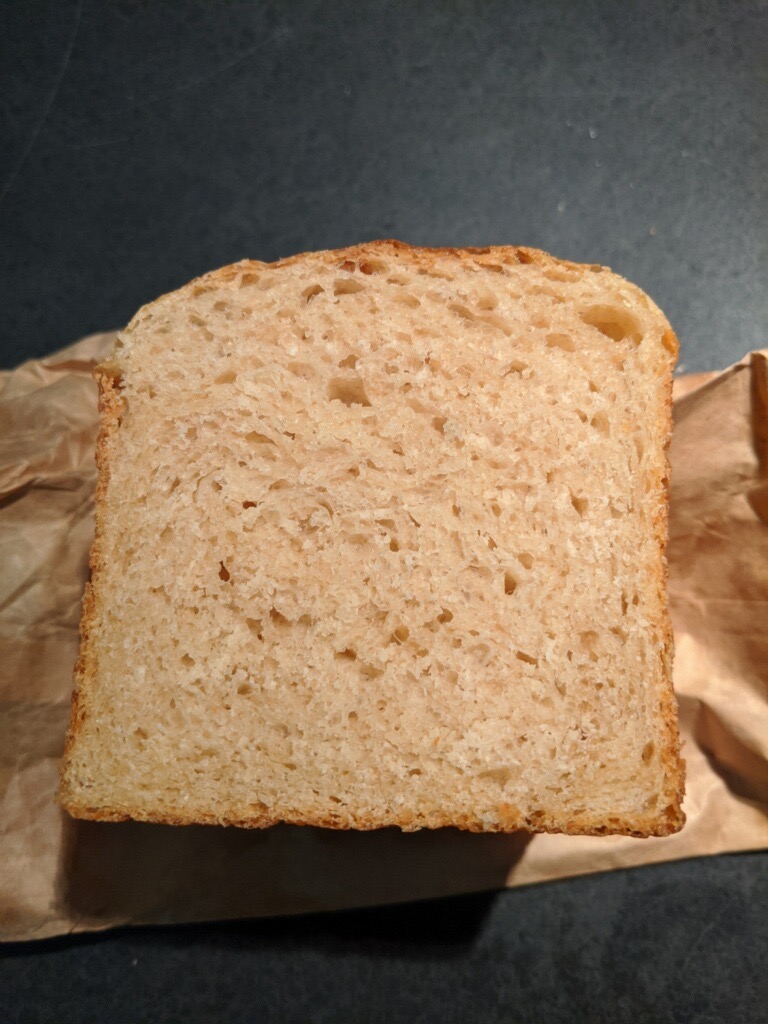
The Crumb …

Notes:

This loaf is inspired by a recipe that King Arthur Flour head baker Martin Philip created for his bid for the 2016 Coupe du Monde de la Boulangerie. Its mild, sweet honey flavor and soft and tender crumb yield slices that are ideally suited for grilled cheese — or any other sandwich, for that matter.

Cut everything in half for the smaller pullman pan.
The recipe in the book is for two smaller pullman or loaf pans.
I really hope everybody enjoys this one.  Gorn is wild for it. I’m wishing I could bake the whole wheat version for my grandkids and win them to whole wheat but that will have to wait for … a vaccine?

How can you not give this one a try, it is beyond compare. If you do bake this, we would love to hear which recipe and/how you made it your own. Just drop me an email – comments my kitchen at mac dot com – and I’ll put you in the round up here after the 1st of July and send you a shiny badge. Please use BBB Buddy w Bee Keeper’s Pain De Mie as the subject line.